Supermarket Ready-to-Eat Section UAE: How to Set It Up Profitably
17 مايو 2026
Picture the scene: it is 6:45 pm on a Tuesday in Dubai. A working professional rushes into a supermarket after a long shift, scanning the aisles with the hopeful energy of someone who absolutely cannot face cooking tonight. In less than three minutes they have picked up a container of roasted chicken with saffron rice, a single-serve portion of hummus, and a freshly baked flatbread — and they are already heading to the checkout. That transaction, which took no effort to produce from the customer’s side, represents one of the highest-margin, highest-frequency revenue opportunities in the modern grocery retail environment. That is the promise and the power of a well-designed supermarket ready-to-eat section UAE.
The UAE’s ready-to-eat (RTE) grocery segment has undergone a remarkable transformation in recent years. Driven by the country’s fast-paced lifestyle, its extraordinarily diverse population of food-literate, quality-conscious residents, and a post-pandemic shift toward convenience without compromise, the supermarket ready-to-eat section UAE has evolved from a secondary service counter into a primary revenue and differentiation engine. Retailers that invest intelligently in this section — with the right hot food display requirements, Dubai Municipality compliance, labelling law adherence, and a disciplined approach to shrinkage control — can generate margins that outperform most other supermarket departments.
Yet most supermarket operators underestimate the complexity involved. Setting up a profitable supermarket ready-to-eat section UAE requires understanding food safety regulations, equipment investment strategy, display psychology, staffing the deli counter effectively, and waste management — all simultaneously. This guide covers every dimension of that challenge in depth, giving you the frameworks and knowledge to build or upgrade an RTE section that is legally compliant, operationally efficient, and genuinely profitable.
The Market Opportunity: Why the Supermarket Ready-to-Eat Section UAE Is a Priority
Before diving into operational details, it is worth understanding the scale of the opportunity. The UAE food service and grocery convenience sector is one of the fastest-growing in the GCC. Research from the UAE Ministry of Economy and various food industry reports consistently highlights the growth of the convenience food segment — particularly among the country’s dominant 25–45 age bracket, which combines high disposable income with significant time scarcity.
The supermarket ready-to-eat section UAE benefits from several structural tailwinds that make this one of the most compelling department investments available to grocery retailers:
• Population diversity: With over 200 nationalities residing in the UAE, demand spans an extraordinary range of cuisines — from Emirati machboos to South Asian biryanis, East Asian rice boxes to Western sandwiches and salads. A well-curated RTE section can serve all of them.
• Lifestyle-driven convenience demand: Long working hours, heavy traffic, and a culture of eating out mean that supermarket RTE sections compete directly with QSR chains — and often win on value, freshness perception, and variety.
• Tourism and hospitality spillover: Dubai’s 15+ million annual visitors create a constant stream of customers unfamiliar with local restaurants but comfortable with supermarket grab-and-go formats.
• Premium willingness to pay: UAE consumers, particularly in urban areas, show a consistent willingness to pay a premium for quality, freshness, and transparency — all of which a well-run supermarket ready-to-eat section UAE can deliver.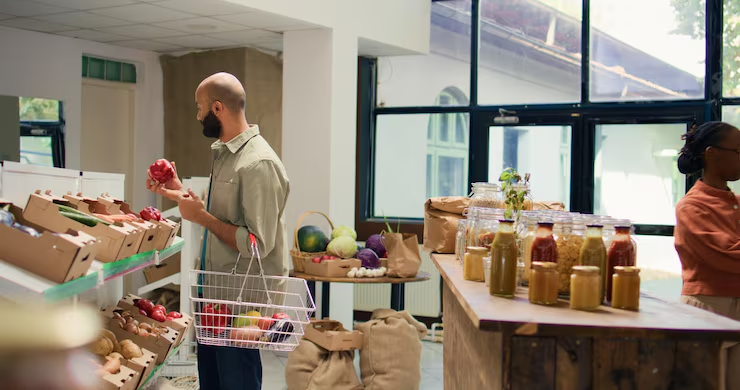
What Does a Profitable RTE Section Actually Look Like?
A profitable supermarket ready-to-eat section UAE is not simply a counter with some food on it. It is a carefully engineered retail experience built around four pillars: food quality and freshness, regulatory compliance, display effectiveness, and operational efficiency. When all four are functioning well, the RTE section consistently delivers gross margins of 40–60% — outperforming most packaged grocery categories.
👉 Explore Supermarket Equipment for Your RTE Section Setup
Hot Food Display Requirements: The Foundation of Your Supermarket Ready-to-Eat Section UAE
The physical display of hot food is both a food safety requirement and a critical revenue driver. Understanding hot food display requirements under UAE regulations — and designing your display to maximise both compliance and commercial performance — is the starting point for any serious supermarket ready-to-eat section UAE investment.
read more : Restaurant Energy Cost Reduction UAE DEWA: Cut Bills Without Losing Output
UAE Hot Food Temperature Requirements
Under Dubai Municipality food safety standards and the UAE’s Federal Food Safety Law (Federal Law No. 10 of 2015), hot food displayed for sale must be maintained at a minimum internal temperature of 63°C (145°F) at all times. This requirement exists to prevent bacterial growth in the temperature danger zone (between 5°C and 63°C), which represents an unacceptable food safety risk.
The implications of this hot food display requirements standard for equipment selection are significant:
• Display equipment must maintain consistent temperature across all zones — not just at the heating element. Poor-quality warmers create cold spots that put product and compliance at risk.
• Temperature logging is required — Dubai Municipality inspectors will ask for temperature records. A digital logging system is not optional for serious operators.
• Hot food has a display life limit — under UAE regulations and best practice, hot food should not be held at display temperatures for more than 2–4 hours without assessment for safety and quality degradation.
Types of Hot Food Display Equipment for a UAE Supermarket RTE Section
| Equipment Type | Best For | Temperature Range | Key Features |
| Bain Marie (wet heat) | Stews, curries, soups, rice dishes | 63–85°C | Even heat, moisture retention, ideal for UAE curry/rice dishes |
| Dry Heat Display Counter | Rotisserie chicken, grilled items | 65–80°C | No steam, better crust retention for roasted products |
| Food Warming Lamp Station | Supplementary warming, display lighting | 63–75°C | Visual appeal + heat; requires primary warming source |
| Hot Holding Cabinet (back of house) | Bulk holding, backup production | 65–90°C | Not for display; essential for production flow management |
| Heat-Retaining Display Cases | Sandwiches, wraps, filled pastries | 63–75°C | Dual-function: display and warming; excellent for UAE deli counters |
The bain marie is the workhorse of the supermarket ready-to-eat section UAE because it aligns perfectly with the UAE’s dominant RTE food formats — rice dishes, stews, and curried proteins that benefit from wet heat retention. However, a complete hot display setup will typically combine a bain marie section with dry-heat display for grilled and roasted items.
👉 Shop Professional Bain Marie Equipment for Supermarket Hot Counters
👉 Browse Food Holding & Warming Line Equipment for Display Counters
👉 Explore Electric Warmers for Hot Food Display Stations
Dubai Municipality (DM) Food Handling Rules: Compliance for the Supermarket Ready-to-Eat Section UAE
Operating a supermarket ready-to-eat section UAE without full alignment to DM food handling rules is not just a legal risk — it is an existential threat to your business. Dubai Municipality’s Food Safety Department is one of the most active food safety regulators in the region, conducting both scheduled and surprise inspections. Fines, temporary closure, and in severe cases permanent licence revocation are all possible consequences of non-compliance.
Key DM Food Handling Rules for RTE Sections
The following are the most critical DM food handling rules that every supermarket ready-to-eat section UAE operator must be aware of and operationally prepared for:
• Staff Food Handler Certificates: All staff who handle, prepare, or serve food must hold a valid Dubai Municipality Food Handler Certificate. This certification must be renewed and records kept on site. No exceptions.
• Personal Hygiene Standards: Clean uniforms, hair nets, disposable gloves for RTE food handling, no jewellery during food preparation. These requirements apply to all staff at all times during service.
• Separation of Raw and RTE Foods: Raw proteins (meat, poultry, fish) must never be stored, prepared, or displayed in proximity to ready-to-eat items. Dedicated equipment, surfaces, and storage zones are mandatory.
• Traceability Requirements: All food items in the RTE section must be traceable to their source ingredients. Purchase records, supplier invoices, and batch records must be maintained for a minimum of 2 years.
• Approved Supplier Requirements: All food suppliers to your RTE section must be registered with and approved by Dubai Municipality. Operating with unapproved suppliers is a serious violation.
• HACCP Implementation: Any food business producing ready-to-eat food at scale is expected to have a functional Hazard Analysis Critical Control Points (HACCP) plan in place and documented.
• Pest Control Documentation: A current, active pest control contract with a DM-approved provider, with monthly service records on file.
Setting Up a DM-Compliant Production Kitchen
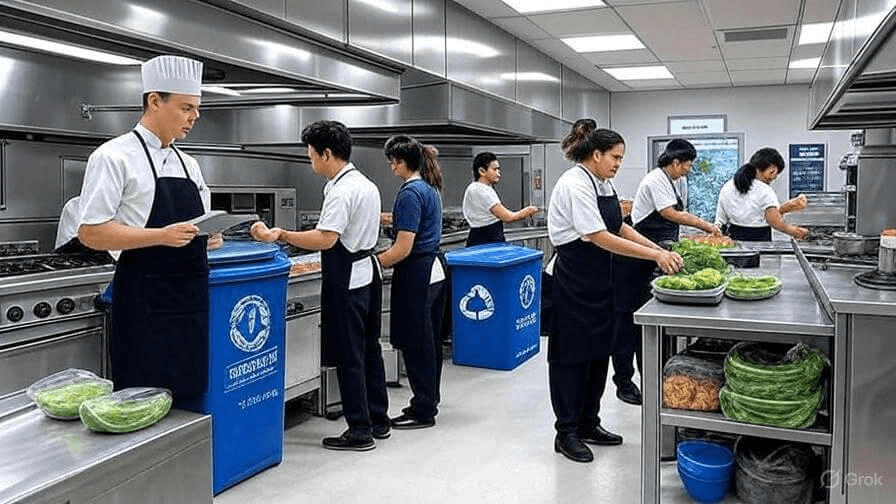
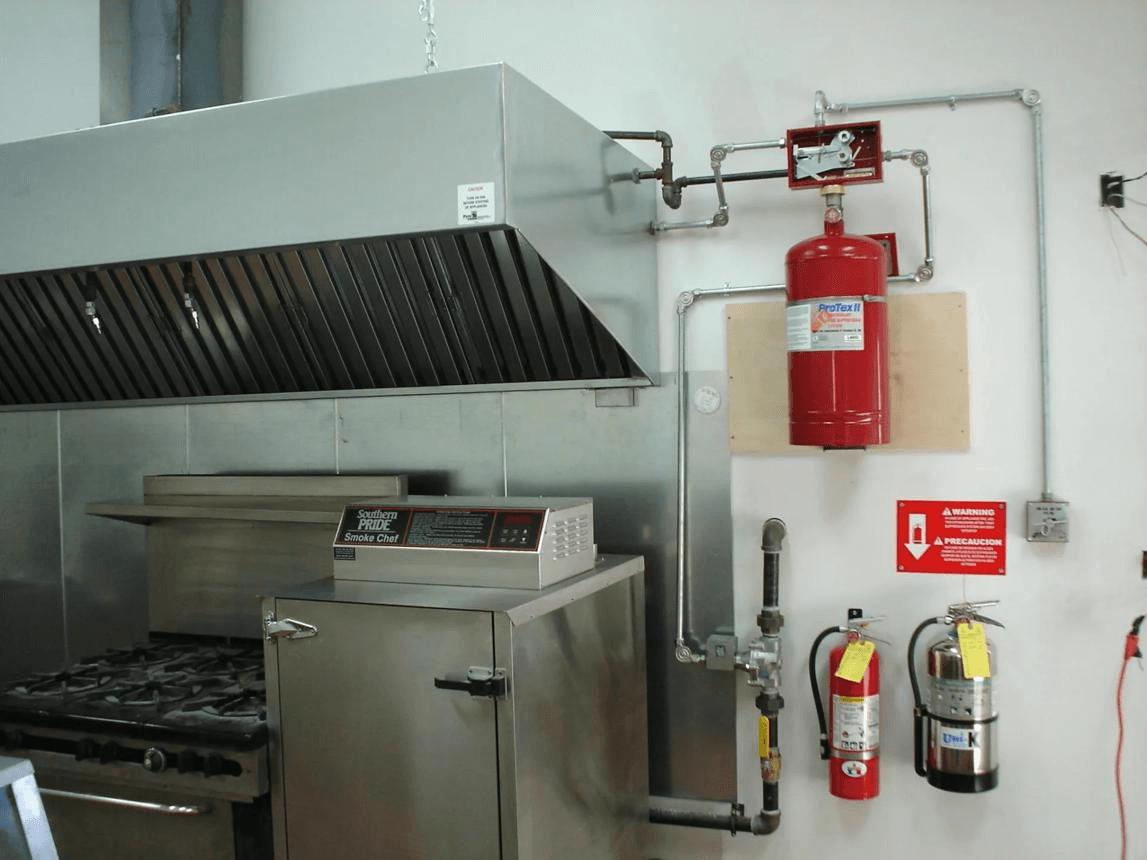
The back-of-house production area supporting your supermarket ready-to-eat section UAE must meet DM’s physical infrastructure requirements, including: adequate ventilation and extraction, impermeable floor and wall surfaces in food preparation zones, dedicated handwashing sinks separate from food preparation sinks, adequate refrigeration, and a documented cleaning and sanitation schedule.
Investing in high-quality stainless steel fabrication for work surfaces, shelving, and preparation tables is both a DM requirement and a practical decision — stainless steel is non-porous, hygienic, durable, and easy to clean to the standards required by DM food handling rules.
👉 Shop Stainless Steel Fabrication for DM-Compliant Production Kitchens
👉 Browse Stainless Steel Equipment for Food Preparation Areas
Labelling Law Compliance: A Critical Pillar of the Supermarket Ready-to-Eat Section UAE
Every pre-packaged item sold through your supermarket ready-to-eat section UAE must comply with UAE labelling law compliance requirements under UAE Cabinet Resolution No. 36 of 2017 and its subsequent amendments, enforced by the Emirates Authority for Standardisation and Metrology (ESMA) in coordination with Dubai Municipality.
Mandatory Label Elements for Supermarket RTE Products
For any pre-packaged ready-to-eat item — from a container of grilled chicken to a wrapped sandwich — the following label elements are legally mandatory under UAE labelling law compliance standards:
• Product Name: Clear, accurate, and non-deceptive. Cannot use misleading descriptors (e.g., calling a composite product by a premium name).
• Ingredient List: In descending order by weight, including all additives and E-numbers with their functional class.
• Allergen Declaration: All 14 major allergens must be clearly highlighted — in bold, italics, or contrasting colour — within the ingredient list AND/OR in a separate allergen statement.
• Net Weight or Volume: Stated in metric units (grams, millilitres, kilograms).
• Date Marking: ‘Best before’ or ‘use by’ date clearly printed. RTE products requiring refrigeration must carry a ‘use by’ date, not merely a ‘best before’ date.
• Storage Conditions: Clear instructions for proper storage (e.g., ‘Keep refrigerated below 5°C’, ‘Consume within 24 hours of opening’).
• Nutrition Information: Per 100g and per serving, including energy (kJ/kcal), protein, carbohydrates, sugars, fat, saturated fat, fibre, and sodium.
• Country of Origin: Mandatory for all food products sold in the UAE.
• Business Name and Address: The name and address of the manufacturer, packer, or importer within the UAE.
• Language Requirement: All mandatory labelling must appear in Arabic. English is additionally required for many categories. No mandatory information may appear only in a foreign language.
Prepared-In-Store RTE Labelling
For food prepared and packaged within the supermarket itself, labelling law compliance still applies in full. This means your supermarket ready-to-eat section UAE must have a labelling system — whether a purpose-built label printer or a certified software solution — capable of producing fully compliant labels for every packaged item, including correct date marking, allergen declarations, and nutritional information for every product in your RTE range.
Date marking deserves particular attention. A ‘use by’ date on an RTE product is not just a legal requirement — it is your primary defence against the reputational and liability risk of a customer consuming a product that has passed its safe consumption window.
👉 Explore Kitchen Supplies Including Labelling Tools & Accessories
Shrinkage Control: Protecting Profitability in the Supermarket Ready-to-Eat Section UAE
If hot food display requirements define the legal floor of your supermarket ready-to-eat section UAE operations, then shrinkage control defines the financial ceiling of your profitability. Shrinkage — the gap between the food you produce and the food you actually sell — is the single greatest destroyer of RTE section margins, and it is almost entirely manageable with the right systems.
Understanding the Three Types of RTE Shrinkage
Shrinkage in the supermarket ready-to-eat section UAE context manifests in three forms, each requiring different management approaches:
• Spoilage Shrinkage: Products that exceed their safe display or holding time and must be discarded. This is the most costly form and the most common in poorly managed RTE sections. In the UAE’s hot climate, inadequate temperature control accelerates spoilage rates significantly.
• Production Shrinkage: Waste generated during food preparation — trim, peel, bones, unsold components. This is manageable through recipe engineering and preparation planning but often overlooked.
• Theft Shrinkage: Both internal (staff consumption or removal) and external (customer theft from open display). This category is lower in supermarkets with monitored RTE counters but should not be ignored.
A Practical Shrinkage Control Framework
The most effective shrinkage control systems for a supermarket ready-to-eat section UAE combine production planning, display management, and waste tracking:
Step 1: Sales-Driven Production Planning
Analyse your sales data by product, by hour, and by day of week. Identify your peak demand windows (typically 12:00–14:00 and 18:00–20:00 in UAE supermarkets) and calibrate your production batches to those windows. Producing your highest-demand products in three smaller batches is almost always more profitable than one large batch that risks end-of-day spoilage.
Step 2: FIFO Discipline
First In, First Out (FIFO) is the foundational display management principle. Older production batches go to the front of the display; newer batches go to the rear. This is a DM food handling rules expectation and a basic profitability protection mechanism.
Step 3: Timed Display Protocols
Assign a maximum display time to every hot food product based on both regulatory requirements and quality standards. When a product exceeds its display time, it must be discarded — not re-heated and redisplayed. A labelling system with time-stamps on every display container supports this discipline.
Step 4: End-of-Day Markdown Strategy
A structured markdown schedule — for example, 30% off at 1 hour before closing, 50% off at 30 minutes — converts near-spoilage product into revenue rather than waste. This must be managed carefully to protect your premium pricing image during peak hours.
Step 5: Weekly Waste Log Review
Every item discarded should be recorded by weight and reason. Weekly review of this log against production records reveals patterns — which products are over-produced, which have quality issues before their display window closes, and where production planning needs adjustment. This shrinkage control practice, done consistently, can reduce waste by 20–35% within three months.
| Shrinkage Type | Typical % Impact on Margin | Primary Control Mechanism | UAE-Specific Consideration |
| Spoilage (end-of-day) | 8–18% | Sales-driven production, markdown strategy | High ambient temps accelerate; AC system critical |
| Display time overruns | 4–10% | Timed display protocols, temperature logging | DM compliance risk adds regulatory penalty exposure |
| Production waste | 3–8% | Recipe engineering, batch planning | Ingredient costs in UAE are significant; trim waste adds up fast |
| Theft (staff + customer) | 1–4% | CCTV, training, portion accountability | Open display counters need monitoring |
| Total shrinkage (unmanaged) | 16–40%+ | — | Can eliminate profitability entirely in high-cost UAE locations |
| Total shrinkage (well-managed) | 5–12% | Combined system approach | Achievable with right planning and equipment |
👉 Shop Reach-In Refrigerators for RTE Cold Storage & Production
👉 Explore Work Top Refrigerators for Deli Counter Operations
Staffing the Deli Counter: The Human Engine of the Supermarket Ready-to-Eat Section UAE
Equipment, compliance, and display design create the conditions for profitability — but it is your people who actually deliver the customer experience that makes your supermarket ready-to-eat section UAE a destination. Staffing the deli counter effectively is one of the most undervalued strategic decisions in supermarket RTE management, and it is one of the most impactful.
read more : Cloud Kitchen vs Restaurant UAE 2025: Which Business Model Wins?
The Roles Required for a Well-Run UAE Supermarket RTE Section
• Deli Counter Manager (Senior): Responsible for production planning, supplier relationship, DM compliance documentation, staff rota, and daily shrinkage reporting. Must hold a DM Food Safety Supervisor Certificate.
• Production Cook: Executes daily production batches to recipe specification. In a UAE context, a cook with multi-cuisine capability (Arab, South Asian, Western) dramatically increases your menu range and relevance.
• Deli Counter Service Staff: Customer-facing portioning, packaging, labelling, and service. Must hold DM Food Handler Certificate and have strong interpersonal skills and multilingual capability (Arabic + English + one additional language is ideal for the UAE market).
• Cleaning and Sanitation Staff: Either dedicated to the RTE section or with a defined cleaning schedule that covers the counter during trading hours. Non-negotiable for DM compliance.
Training Requirements for Deli Counter Staff
Effective staffing the deli counter in a supermarket ready-to-eat section UAE goes beyond basic food handler certification. Your training programme should cover:
• Temperature monitoring procedures: How to use digital probe thermometers, how to log readings, and what to do when a reading falls below compliance thresholds
• Allergen management: How to answer customer allergen queries accurately, when to escalate, and how to prevent cross-contamination during service
• Product knowledge: Ingredients, preparation methods, cultural context of dishes (particularly important for Emirati-inspired products or dishes from unfamiliar cuisines)
• Customer service standards: Portioning consistency, presentation, upselling techniques, handling complaints
• FIFO and display management: The practical discipline of maintaining a display that is always at peak quality
Scheduling for Peak UAE Supermarket Traffic Patterns
Effective staffing the deli counter requires scheduling that matches the UAE’s distinctive daily traffic patterns. Supermarket foot traffic in the UAE typically peaks at three windows:
• Morning (8:00–10:00): Breakfast grab-and-go, particularly strong during weekdays. Breakfast RTE items (pastries, egg dishes, sandwiches) drive transactions.
• Midday (12:00–14:00): Lunch rush, the highest-volume window for hot food sales. Maximum staffing required. Production must be complete before 11:30 to ensure full display at peak.
• Evening (18:00–21:00): Dinner-replacement purchases. The second-highest volume window and the most important for full hot food range availability.
A poorly staffed counter during these windows creates queues, reduces transaction completion rates, and damages the perception of freshness — all of which undermine the profitability of your supermarket ready-to-eat section UAE investment.
👉 Browse Kitchen Hand Tools for Professional Deli Counter Operations
👉 Explore Food Slicers for High-Volume Deli Counter Efficiency
Production Equipment: Building the Kitchen Behind the Supermarket Ready-to-Eat Section UAE
A supermarket ready-to-eat section UAE is only as good as the production kitchen behind it. The quality, consistency, and range of your RTE offering are directly determined by the equipment you invest in. This is not an area for compromise — the wrong equipment creates quality limitations, compliance risks, and operational inefficiencies that compound over time.
Essential Cooking Equipment for UAE Supermarket RTE Production
• Commercial Combi Oven: The most versatile production tool available. Combines convection heat with steam, allowing roasting, steaming, baking, and regeneration in a single unit. Essential for high-volume, multi-format RTE production in UAE supermarkets.
• Commercial Fryers: For fried items (chicken pieces, samosas, spring rolls, falafel) that are among the highest-demand RTE products in the UAE market. Both floor-standing and countertop models serve different volume requirements.
• Electric Griddles: For sandwiches, wraps, panini, and grilled proteins. High throughput, easy to clean, consistent temperature.
• Commercial Ranges with Oven: For sauce production, soups, stews, and bulk cooking. The foundation of any serious RTE production kitchen.
• Electric Rotisserie: Rotisserie chicken is one of the single most consistent sellers in any supermarket ready-to-eat section UAE. The visual theatre of the turning rotisserie also functions as a powerful display and aroma marketing tool.
👉 Shop Commercial Combi Ovens for High-Volume RTE Production
👉 Browse Commercial Fryers for Supermarket RTE Sections
👉 Explore Electric Rotisserie for Supermarket Hot Counters
👉 Shop Electric Griddles for Deli Counter Production
👉 Browse Cooking Ranges with Oven for RTE Kitchen Setup
Refrigeration for the RTE Production and Display Chain
Your refrigeration infrastructure underpins every aspect of your supermarket ready-to-eat section UAE — from ingredient storage through production to finished product display. The chain cannot have gaps: a single temperature failure anywhere in the process creates both a DM food handling rules violation and a product quality failure.
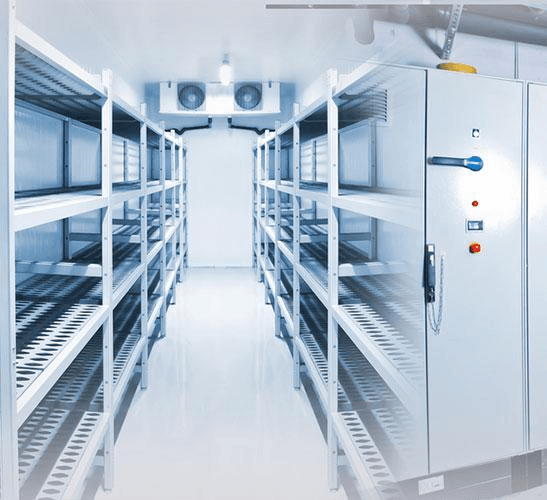
• Walk-in Coolroom / Large Reach-in Refrigerators: For raw ingredient storage, segregated by category (meat, dairy, produce).
• Chef Base Refrigerators: Refrigerated drawers beneath a preparation surface, keeping ingredients at safe temperatures during active production — essential for a busy RTE kitchen.
• Work Top Chillers: For the deli counter service area, keeping portioned and packaged items cold during the service window.
• Blast Chiller: Critical for cooling hot food rapidly after cooking to comply with DM food handling rules on cooling protocols. Required for any operation cooking food in advance of service.
👉 Explore Chef Base Refrigerators for RTE Production Kitchens
👉 Shop Blast Chillers for DM-Compliant Food Cooling
👉 Browse Work Top Chillers for Deli Counter Service Areas
Dishwashing for the RTE Production Area
High-volume food production generates high-volume warewashing needs. A supermarket ready-to-eat section UAE operation preparing food from scratch daily will generate significant volumes of pots, pans, containers, and utensils that must be cleaned to DM sanitation standards. Investing in a commercial dishwasher suited to your production volume is essential — manual washing in a high-volume environment is both inefficient and often insufficient to meet hygiene standards.
👉 Shop Undercounter Dishwashers for Compact RTE Kitchen Setups
👉 Explore Hood Dishwashers for Higher-Volume RTE Operations
Menu Strategy for a Profitable Supermarket Ready-to-Eat Section UAE
The right menu is the difference between an RTE section that customers visit occasionally and one that becomes a habitual destination. Your supermarket ready-to-eat section UAE menu strategy must balance three competing demands: the diversity of the UAE’s consumer base, the operational constraints of your production kitchen, and the margin requirements of your business.
Building Your Core Menu Around UAE Consumer Segments
| Consumer Segment | Key RTE Categories | Price Sensitivity | Peak Purchase Window |
| South Asian residents (largest segment) | Biryani, daal, curry, samosa, roti | Moderate | Lunch & dinner |
| Arab residents (Emirati + expat) | Machboos, harees, shawarma, fatayer, hummus | Low–Moderate | Evening, post-prayer |
| Western expats (European, North American) | Sandwiches, salads, grilled proteins, pasta | Low (premium willing) | Lunch |
| East & Southeast Asian residents | Fried rice, noodle boxes, spring rolls | Moderate | Lunch & dinner |
| Health-conscious (cross-segment) | Salad bowls, grain dishes, vegan options | Low (premium willing) | Lunch, early evening |
| Tourists & visitors | Safe, recognisable, visually appealing items | Low (premium willing) | Any time |
A thoughtfully designed menu for a supermarket ready-to-eat section UAE does not try to serve all segments equally at all times. Instead, it identifies the dominant segment in its specific catchment area and builds depth there, while maintaining breadth across other segments. A supermarket in JBR or Marina Walk will have different menu priorities than one in Al Qusais or Deira.
High-Margin RTE Products to Prioritise
• Rotisserie Chicken: Low ingredient cost (whole bird), high sale price (AED 28–45 whole), high visual appeal, extended display life. The highest ROI single product in most supermarket ready-to-eat section UAE contexts.
• Meal Boxes (protein + carb + vegetable): High ATV (AED 22–42 per box), structured portioning controls cost, broad appeal across consumer segments.
• Specialty Items with Origin Story: Emirati machboos, Levantine mezze platters, Indian biryani with regional origin labelling. Premium positioning possible at AED 28–65 per portion.
• Single-Serve Salad Bowls: Low ingredient cost, high margin (60%+), growing demand, minimal hot holding requirements.
• Fresh Pastries and Baked Items: Connects the RTE section to the bakery counter, drives impulse purchases, high margin, low shrinkage risk when produced in controlled batches.
👉 Explore All Restaurant Kitchen Equipment for Supermarket RTE Setup
👉 Browse Food Preparation Equipment for High-Volume RTE Production
Frequently Asked Questions
What temperature must hot food be held at in a UAE supermarket RTE section?
Under UAE food safety regulations enforced by Dubai Municipality, hot food in a supermarket ready-to-eat section UAE must be maintained at a minimum internal temperature of 63°C (145°F) at all times during display. Food that falls below this threshold must be discarded or rapidly reheated to a safe temperature before being returned to display — reheating can only be done once.
What are the DM food handling rules for supermarket RTE sections?
Key DM food handling rules for a supermarket ready-to-eat section UAE include: all food-handling staff must hold DM Food Handler Certificates; HACCP documentation must be in place; raw and RTE foods must be strictly segregated; temperature logs must be maintained; all food suppliers must be DM-approved; and the facility must maintain an active pest control contract with a DM-registered provider.
What labelling is required on ready-to-eat food sold in UAE supermarkets?
Under UAE labelling law compliance requirements, all pre-packaged RTE products must display: product name, full ingredient list with allergens highlighted, net weight, use-by date, storage conditions, nutritional information, country of origin, and manufacturer/packer details. All mandatory information must appear in Arabic, with English additionally required for most categories.
How do I reduce food waste in a supermarket ready-to-eat section?
Effective shrinkage control in a supermarket ready-to-eat section UAE requires: sales-data-driven production planning aligned to peak demand windows, strict FIFO display management, timed display protocols for every product, a structured end-of-day markdown system, and weekly waste log review to continuously refine production volumes.
How many staff do I need for a UAE supermarket deli counter?
A minimum viable staffing the deli counter model for a mid-size UAE supermarket RTE section typically includes: 1 production cook, 2 service staff per peak shift, and 1 part-time manager or supervisor. Scale up based on your production volume and sales targets. All staff must hold DM Food Handler Certificates.
What equipment do I need for a hot food display in a UAE supermarket?
The core hot food display requirements equipment for a supermarket ready-to-eat section UAE includes: a commercial bain marie for wet-heat dishes (rice, curries, stews), a dry-heat display counter for roasted and grilled items, and an electric rotisserie for whole bird display. All equipment must be capable of maintaining food above 63°C consistently.
What is the profitability of a supermarket ready-to-eat section in the UAE?
A well-managed supermarket ready-to-eat section UAE can achieve gross margins of 40–60% on hot food items, outperforming most packaged grocery categories. Margin is heavily dependent on shrinkage control — unmanaged shrinkage can consume 16–40% of margin, while a disciplined operation holds shrinkage to 5–12%.
Do I need a HACCP plan for a supermarket RTE section in Dubai?
Yes. Any food business in Dubai preparing food for direct consumption is expected by Dubai Municipality to have a functional and documented HACCP (Hazard Analysis Critical Control Points) plan. This applies to all supermarket ready-to-eat section UAE operations preparing food on site. The plan must identify all critical control points, monitoring procedures, corrective actions, and verification records.
What are the most profitable products in a UAE supermarket RTE section?
The consistently highest-margin products in a supermarket ready-to-eat section UAE are: rotisserie chicken (low ingredient cost, high retail price), single-serve salad bowls (60%+ gross margin), meal boxes (strong ATV, portion cost control), and specialty ethnic dishes with origin storytelling (premium pricing justification). High-demand fried items (samosas, falafel, spring rolls) also offer strong margins when shrinkage control is managed effectively.
Can I serve alcohol-based food products in the RTE section of a UAE supermarket?
Food products containing alcohol (e.g., wine-braised dishes, beer-battered items) can only be sold by licensed premises in the UAE. Supermarkets with the appropriate Dubai Municipality food licence and alcohol-sales licence can offer such products; those without may not. When in doubt, always consult with Dubai Municipality and your legal advisors before adding such items to your supermarket ready-to-eat section UAE menu.
Conclusion: Building a Profitable Supermarket Ready-to-Eat Section UAE
The supermarket ready-to-eat section UAE represents one of the most compelling growth opportunities available to grocery retailers in the region today. It sits at the intersection of the UAE’s convenience culture, its extraordinary culinary diversity, its health-conscious premium-spending consumer base, and a regulatory environment that, while demanding, ultimately raises the bar in ways that protect your brand and your customers.
Success requires mastering every pillar simultaneously: full compliance with hot food display requirements and DM food handling rules, rigorous labelling law compliance for every product, disciplined shrinkage control systems, thoughtful staffing the deli counter rosters, and a production kitchen equipped for volume, consistency, and quality. None of these can be treated as optional — they are all interdependent, and weakness in any one dimension undermines the whole.
The operators who will build the most profitable supermarket ready-to-eat section UAE counters over the next five years are those who invest in the right equipment, train and value their staff, stay ahead of regulatory requirements, and treat the RTE section as the high-potential, high-responsibility business unit it truly is.
If this guide has given you clarity and direction, share it with your team, leave your questions in the comments, and explore the equipment categories on our website. Your supermarket ready-to-eat section UAE transformation starts with the right foundations — and we are here to help you build them.
👉 Browse All Supermarket Equipment at Al Razana
👉 Explore All Cooking Equipment for RTE Production
👉 Shop All Commercial Ovens for High-Volume RTE Kitchens
👉 Browse All Restaurant Kitchen Equipment for Supermarket Setup