Food Waste Regulations UAE Restaurants: What Must Be Done to Stay Compliant
15 يونيو 2026
Food waste has become one of the most important operational and sustainability challenges facing the hospitality industry worldwide.
In the UAE, restaurants, hotels, catering companies, cloud kitchens, and foodservice operators are increasingly expected to manage food waste responsibly while supporting broader sustainability initiatives.
For many restaurant operators, food waste is often viewed only as an environmental concern.
In reality, it is also a profitability issue.
Every kilogram of wasted food represents:
- Lost inventory
- Lost labour
- Lost preparation time
- Lost storage space
- Lost revenue opportunities
This means effective food waste management can improve both compliance and profitability simultaneously.
As foodservice businesses continue to grow across the UAE, operators are increasingly focusing on structured waste management systems designed to reduce waste generation, improve operational efficiency, and support sustainability objectives.
As a provider of complete commercial kitchen solutions, Al Razana Kitchen Equipment helps restaurants, hotels, catering companies, cloud kitchens, and foodservice operators create operational environments designed to improve efficiency, reduce waste, support compliance, and strengthen long-term business performance.
Why Food Waste Matters in Modern Restaurant Operations
Food waste affects almost every area of a restaurant business.

Many operators focus heavily on sales growth while overlooking losses occurring behind the scenes.
Food waste can impact:
- Profit margins
- Inventory management
- Storage efficiency
- Operational productivity
- Sustainability performance
- Brand reputation
Reducing waste is often one of the fastest ways to improve operational efficiency.
Food Waste Is More Than Unsold Food
Many forms of waste occur before products ever reach customers.
These may include:
- Overstocking
- Improper storage
- Preparation losses
- Spoilage
- Production inefficiencies
- Portion control issues
Understanding these sources is the first step toward improvement.
Understanding Food Waste Management in UAE Restaurants
Modern foodservice operations are increasingly expected to implement structured approaches to waste reduction.

This involves much more than simply disposing of unwanted food.
Successful waste management systems focus on:
- Prevention
- Monitoring
- Segregation
- Documentation
- Continuous improvement
The objective is minimizing waste generation before disposal becomes necessary.
Why Restaurants Are Focusing More on Waste Reduction
Several factors are driving increased attention toward food waste:
- Sustainability goals
- Operational efficiency
- Cost control
- Customer expectations
- Corporate responsibility initiatives
Restaurants that address these areas proactively often achieve stronger long-term outcomes.
Why Food Waste Is a Profitability Challenge
Many restaurant owners underestimate the true cost of wasted food.

The financial impact extends beyond ingredient costs.
Every Wasted Product Represents
- Purchasing costs
- Storage costs
- Labour costs
- Utility consumption
- Preparation resources
When viewed collectively, waste can significantly affect overall profitability.
Waste Reduction Supports Margin Improvement
Businesses that reduce unnecessary waste often experience:
- Better inventory utilization
- Improved purchasing efficiency
- Stronger operational control
- Healthier profit margins
This makes waste reduction both a sustainability strategy and a financial strategy.
Common Sources of Food Waste in Restaurants
Understanding where waste originates allows businesses to take corrective action.

Overstocking
Excess inventory frequently leads to spoilage.
Poor Forecasting
Demand planning errors often create unnecessary waste.
Storage Problems
Improper storage conditions can shorten product lifespan.
Production Inefficiencies
Over-preparation frequently contributes to food loss.
Portion Control Issues
Inconsistent portioning can increase waste levels.
Menu Complexity
Large menus often create inventory management challenges.
Identifying these areas helps restaurants develop targeted improvement strategies.
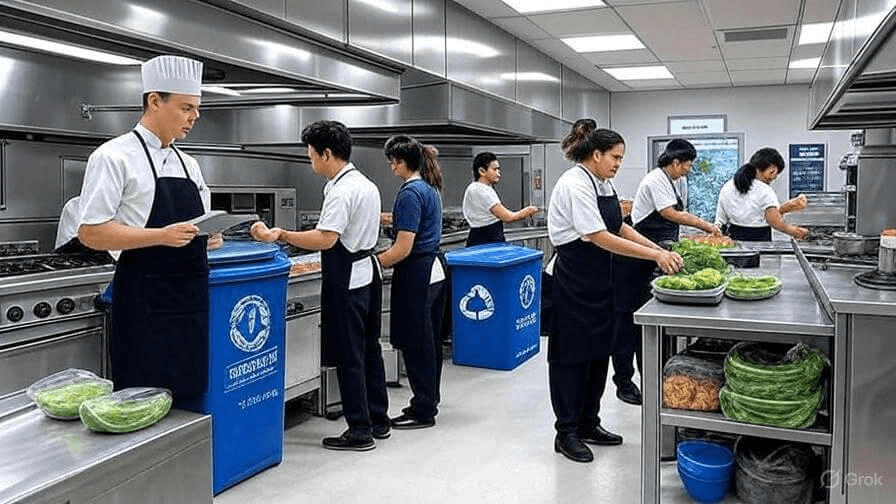
Why Waste Segregation Is Important
Effective waste management begins with organization.

Waste streams should be managed in a structured and controlled manner.
Benefits of Proper Segregation
Segregation helps support:
- Operational efficiency
- Sustainability initiatives
- Waste tracking
- Disposal management
- Compliance objectives
Businesses that separate waste effectively often gain better visibility into operational performance.
How Commercial Kitchen Design Influences Food Waste
Many food waste challenges originate from operational inefficiencies.
Commercial kitchen design plays a major role in determining how effectively products move through the facility.
Well-Planned Kitchens Support
- Better inventory control
- Improved storage management
- Faster workflows
- Reduced spoilage
- More efficient food preparation
The physical environment can significantly influence waste generation.
Why Planning Matters
Businesses that invest in professional kitchen planning often discover opportunities to reduce waste while improving productivity.
Inventory Management and Waste Reduction
Inventory management is one of the most powerful tools available for reducing food waste.
Successful operators maintain visibility across inventory levels and consumption patterns.
Effective Inventory Systems Support
- Better forecasting
- Reduced spoilage
- Improved purchasing decisions
- Greater operational control
Inventory discipline often produces immediate operational benefits.
The Role of Staff Training in Waste Reduction
Employees influence waste generation every day.
Training programs can help teams understand the importance of waste management and operational efficiency.
Staff Awareness Supports
- Better portion control
- Improved food handling
- Reduced preparation losses
- Greater accountability
- Consistent operational practices
Waste reduction becomes easier when the entire team participates.
Why Food Safety and Waste Management Work Together
Food waste management should not be separated from food safety programs.
Both systems share similar objectives:
- Process control
- Operational consistency
- Risk reduction
- Documentation
- Continuous improvement
Businesses implementing structured food safety systems may also benefit from reviewing the HACCP Certification UAE Restaurant Guide: Step-by-Step Implementation to strengthen operational controls across multiple areas.
Commercial Kitchen Equipment and Waste Reduction
Equipment selection directly influences food waste levels.
Poorly performing equipment can contribute to spoilage, inefficiencies, and inventory losses.
Equipment Impacts
- Product preservation
- Storage performance
- Temperature consistency
- Production efficiency
- Inventory protection
Choosing the right equipment supports both operational performance and sustainability goals.
How Al Razana Kitchen Equipment Helps Reduce Food Waste
Reducing food waste starts with building efficient operational systems.
Al Razana Kitchen Equipment supports foodservice businesses through complete commercial kitchen solutions designed to improve efficiency, productivity, and resource utilization.
Commercial Kitchen Design
Creating workflows that reduce operational inefficiencies.
Kitchen Planning & Consultancy
Aligning operational goals with business objectives.
Commercial Equipment Supply
Providing foodservice equipment designed for professional hospitality environments.
Kitchen Equipment Installation
Ensuring systems are implemented correctly from day one.
Stainless Steel Fabrication
Creating customized solutions that maximize operational efficiency.
Turnkey Commercial Kitchen Projects
Delivering complete kitchen solutions from concept through execution.
Implementing Food Waste Tracking Systems
One of the most effective ways to reduce food waste is to measure it consistently.
Many restaurants underestimate the amount of food being lost because waste is not tracked systematically.
The principle is simple:
You cannot improve what you do not measure.
Why Waste Tracking Matters
Waste tracking helps businesses:
- Identify problem areas
- Improve purchasing decisions
- Reduce unnecessary costs
- Improve menu performance
- Support sustainability goals
- Strengthen operational control
The most successful F&B operators treat waste data the same way they treat sales data.
What Restaurants Should Monitor
Tracking may include:
- Preparation waste
- Spoilage losses
- Overproduction waste
- Plate waste
- Inventory write-offs
- Expired products
This information helps managers make better operational decisions.
Building a Waste Reduction Culture
Technology and systems alone are not enough.
Long-term success requires a culture where waste reduction becomes part of daily operations.
Characteristics of Waste-Conscious Teams
Employees understand:
- Inventory value
- Portion standards
- Storage procedures
- Product handling practices
- Production planning requirements
When employees understand the financial and operational impact of waste, accountability improves significantly.
Leadership Drives Results
Managers who actively monitor waste performance often achieve better results than businesses that treat waste management as a secondary priority.
Why Menu Engineering Plays a Major Role in Food Waste Reduction
Many waste issues originate long before ingredients enter the kitchen.
They begin during menu planning.
Complex Menus Often Create
- Excess inventory
- Low product turnover
- Higher spoilage risks
- Purchasing inefficiencies
By simplifying menu structures and optimizing ingredient utilization, restaurants can often reduce waste substantially.
Smart Menu Design Supports
- Inventory efficiency
- Better forecasting
- Faster production
- Improved profitability
This is one reason why operational planning should begin before purchasing equipment or launching new concepts.
Food Waste Reduction Strategies for Restaurants
Successful restaurants often implement multiple strategies simultaneously.
Improve Demand Forecasting
Accurate forecasting reduces overproduction and unnecessary inventory accumulation.
Optimize Inventory Rotation
Products should move efficiently through storage and production processes.
Standardize Portion Sizes
Consistency helps reduce preparation and plate waste.
Improve Storage Practices
Proper storage extends product life and protects inventory value.
Train Staff Continuously
Employees should understand how daily decisions influence waste levels.
Analyze Waste Data Regularly
Ongoing analysis supports continuous improvement.
Together, these strategies help create a more efficient operation.
Why Storage Design Impacts Waste Levels
Storage areas are often overlooked when discussing waste reduction.
However, poor storage systems frequently contribute to product losses.
Well-Designed Storage Supports
- Product visibility
- Inventory rotation
- Temperature consistency
- Organization
- Traceability
When storage systems function properly, businesses can reduce spoilage while improving operational efficiency.
Commercial Refrigeration and Food Preservation
Temperature control remains one of the most important factors affecting food waste.
Reliable refrigeration systems help maintain product quality and extend usable inventory life.
Refrigeration Influences
- Product freshness
- Inventory protection
- Food safety
- Waste reduction
- Operational reliability
Investing in quality refrigeration infrastructure often supports both compliance and profitability objectives.
Why Commercial Kitchen Design Is Central to Waste Management
Food waste reduction is not simply a purchasing issue.
It is an operational issue.
Commercial kitchen design directly affects how efficiently products move through the facility.
Well-Planned Kitchens Improve
- Inventory control
- Production flow
- Storage efficiency
- Staff productivity
- Product handling
These improvements can significantly reduce unnecessary waste.
Design Supports Sustainability
Businesses that prioritize operational efficiency often find it easier to achieve sustainability objectives as well.
Common Food Waste Compliance Mistakes
Many restaurants unintentionally create waste management challenges through poor operational practices.
Lack of Waste Monitoring
Without measurement, improvement becomes difficult.
Weak Inventory Controls
Poor purchasing decisions often result in spoilage.
Inadequate Staff Training
Employees may unknowingly contribute to waste.
Poor Storage Organization
Disorganized storage frequently increases product losses.
Overly Complex Menus
Excessive menu variety often creates inventory inefficiencies.
Reactive Management
Waiting until waste becomes a major problem usually increases costs.
Avoiding these mistakes helps strengthen both compliance and profitability.
Sustainability and Restaurant Profitability Can Work Together
Many restaurant operators assume sustainability initiatives increase costs.
In reality, reducing waste often improves financial performance.
Benefits of Waste Reduction Programs
Businesses frequently experience:
- Lower purchasing costs
- Improved inventory turnover
- Better operational control
- Stronger profitability
- Enhanced brand reputation
This makes waste management both an environmental strategy and a business strategy.
Why Restaurants Are Investing More in Sustainable Operations
Consumer expectations continue to evolve.
Customers increasingly value businesses that demonstrate responsible operational practices.
Sustainability Helps Support
- Brand differentiation
- Customer loyalty
- Corporate responsibility goals
- Operational efficiency
- Long-term business resilience
Restaurants that embrace sustainability often strengthen their competitive position.
Why Complete Commercial Kitchen Solutions Help Reduce Waste
Waste reduction is most effective when operational systems work together.
This requires more than equipment purchases.
It requires strategic planning.
A complete solution includes:
Commercial Kitchen Design
Creating efficient workflows that minimize waste.
Kitchen Planning & Consultancy
Aligning operational goals with sustainability objectives.
Equipment Selection
Choosing solutions that support inventory protection and efficient production.
Installation Services
Ensuring systems perform as intended.
Stainless Steel Fabrication
Creating customized workspaces optimized for productivity.
Maintenance Support
Helping equipment maintain peak performance.
This integrated approach helps reduce waste while improving operational efficiency.
Why Restaurants Across the UAE Choose Al Razana Kitchen Equipment
Foodservice businesses need more than suppliers.
They need partners who understand operations, efficiency, compliance, and long-term growth.
Al Razana Kitchen Equipment helps restaurants, hotels, cloud kitchens, catering companies, and hospitality operators create commercial kitchens designed to support these goals.
Commercial Kitchen Design
Developing kitchens optimized for efficiency and sustainability.
Kitchen Planning & Consultancy
Supporting informed business decisions.
Commercial Equipment Supply
Providing professional foodservice equipment and commercial kitchen equipment.
Kitchen Equipment Installation
Ensuring operational readiness from the beginning.
Stainless Steel Fabrication
Creating custom-built solutions tailored to operational requirements.
Maintenance & Technical Support
Supporting long-term performance and reliability.
Turnkey Commercial Kitchen Projects
Delivering complete solutions from concept development through final implementation.
This comprehensive approach helps businesses improve productivity while reducing waste and operating costs.
The Future of Food Waste Management in UAE Restaurants
The hospitality industry is becoming increasingly focused on efficiency, sustainability, and resource optimization.
Restaurants that implement structured waste management systems today will be better positioned for future operational and regulatory expectations.
Success will increasingly depend on:
- Data-driven decision making
- Inventory control
- Efficient kitchen design
- Staff accountability
- Sustainable operational practices
Businesses that embrace these principles often achieve stronger long-term results.
Conclusion
Understanding food waste regulations UAE restaurants must follow is only the beginning.
True success comes from building operational systems that reduce waste before it occurs.
Food waste affects profitability, inventory performance, sustainability goals, customer perception, and overall business efficiency.
By implementing structured waste tracking systems, improving forecasting, optimizing storage, training employees, and investing in efficient commercial kitchen infrastructure, restaurants can significantly improve both compliance and financial performance.
As a trusted provider of complete commercial kitchen solutions, Al Razana Kitchen Equipment supports restaurants, hotels, cloud kitchens, catering companies, and hospitality operators across the UAE through commercial kitchen design, planning, equipment supply, installation, fabrication, maintenance, consultancy, and turnkey project delivery designed to improve efficiency, reduce waste, and support sustainable growth.
The most successful foodservice businesses do not treat waste management as a compliance requirement.
They treat it as a strategic business advantage.
Frequently Asked Questions
Why is food waste management important for restaurants?
Food waste directly affects profitability, inventory utilization, sustainability performance, and operational efficiency.
How can restaurants reduce food waste?
Businesses can reduce waste through better forecasting, inventory management, storage practices, portion control, staff training, and waste tracking systems.
Why should restaurants track food waste?
Tracking helps identify operational inefficiencies and supports data-driven improvement decisions.
How does commercial kitchen design affect food waste?
Efficient kitchen layouts improve storage management, workflow efficiency, inventory control, and product handling.
What role does refrigeration play in waste reduction?
Reliable refrigeration systems help preserve food quality, extend product life, and reduce spoilage.
Why is staff training important for waste management?
Employees influence food handling, preparation practices, and inventory utilization every day.
How does menu engineering reduce waste?
Optimized menus improve ingredient utilization, reduce excess inventory, and simplify production processes.
What are turnkey commercial kitchen projects?
Turnkey projects include design, planning, procurement, installation, fabrication, maintenance, and project coordination under one integrated solution.
What services does Al Razana Kitchen Equipment provide?
Al Razana provides commercial kitchen design, consultancy, equipment supply, installation, stainless steel fabrication, maintenance support, and turnkey commercial kitchen solutions.
Why do restaurants choose Al Razana Kitchen Equipment?
Because Al Razana helps businesses create efficient, compliance-focused commercial kitchen environments designed to improve productivity, reduce waste, support sustainability, and drive long-term growth across the UAE.
مقالات أخرى
Cold Storage Temperature Requirements UAE Legal: Standards Every Food Business Must Understand
Fire Safety UAE Restaurant Kitchen Requirements: What Every Restaurant Owner Must Know