Restaurant Kitchen Layout Small Space UAE: How to Plan Under 40 sqm
28 April 2026
Picture this: you’ve signed the lease on a 35-square-meter commercial space in Sharjah, Dubai, or Abu Dhabi. The rent is affordable, the location is perfect, and your business plan is solid. But then you walk into the empty shell of your future kitchen and reality hits — how on earth do you fit a fully functional, municipality-approved commercial kitchen into this compact space? If you’re grappling with the challenge of restaurant kitchen layout small space UAE, you’ve landed on exactly the right page.
Compact kitchens are not a compromise — they are a strategic choice. Some of the most successful and profitable food businesses in the UAE operate out of kitchens smaller than 40 square meters. Cloud kitchens, ghost kitchens, small cafés, specialty food counters, and satellite catering operations all thrive in tight spaces when designed intelligently.
The secret? It’s not about how much space you have — it’s about how brilliantly you use it. A well-designed restaurant kitchen layout for small spaces in the UAE can outperform a poorly organized 100 sqm kitchen in efficiency, hygiene, output, and profitability. This guide is your complete playbook for making every square meter count.
We’ll cover everything from foundational layout principles and the best kitchen configurations for compact spaces, to must-have compact equipment recommendations, UAE municipality compliance requirements, and practical design tips that professional kitchen consultants charge thousands of dirhams to provide. Let’s get started.
Why Restaurant Kitchen Layout Small Space UAE Planning Requires a Different Approach
Designing a kitchen layout for a compact UAE food business is fundamentally different from planning a large commercial kitchen. In a spacious kitchen, mistakes in layout can be corrected by simply repositioning equipment or adding workflow zones. In a sub-40 sqm kitchen, every centimeter is precious, and a single poor design decision can cascade into operational chaos.
The UAE’s commercial kitchen regulations — enforced by municipalities across Dubai, Abu Dhabi, Sharjah, Ajman, and the Northern Emirates — add another layer of complexity. Your kitchen must comply with specific requirements around ventilation, food safety zones, waste management, and equipment specifications, regardless of how small the space is.
Understanding the unique demands of restaurant kitchen layout small space UAE planning means recognizing that you’re optimizing for three things simultaneously: operational efficiency, regulatory compliance, and food quality. Miss any one of these, and the entire operation suffers.
read more : How to Open a Supermarket in Dubai (Open Supermarket Dubai License Explained)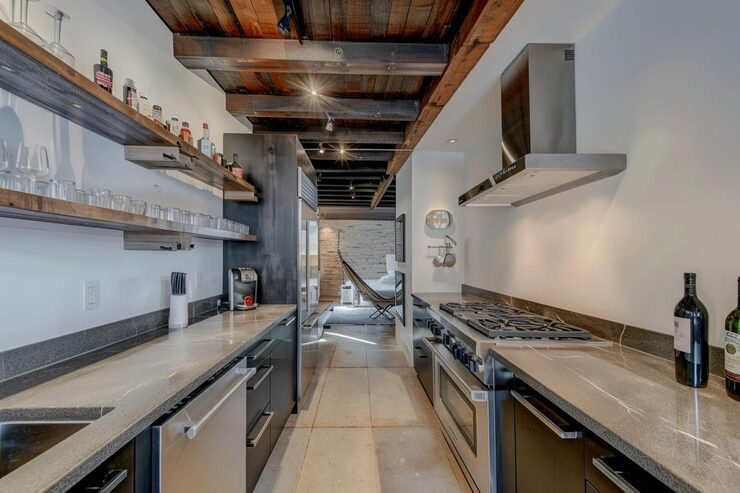
The 40 sqm Threshold: What It Means for UAE Food Businesses
The 40 sqm threshold is widely used as a planning benchmark in UAE commercial kitchen design. Below this size, certain layout strategies that work in larger kitchens simply don’t translate. For example, the classic assembly-line kitchen layout — which works beautifully in a 100 sqm+ kitchen — becomes impractical when your total space is under 40 sqm. Instead, you need purpose-built configurations that maximize workflow efficiency within tight dimensional constraints.
👉 Explore Compact Commercial Cooking Equipment – Countertop & Space-Saving Ranges
The 5 Most Effective Restaurant Kitchen Layout Small Space UAE Configurations
Kitchen layout configuration is the single most impactful decision you’ll make when designing a small commercial kitchen. The right configuration can make a 30 sqm kitchen feel spacious and efficient; the wrong one can make a 40 sqm kitchen feel impossibly cramped. Here are the five configurations that work best for compact UAE commercial kitchens:
1. The Galley (Parallel Line) Layout
The galley layout places equipment in two parallel lines facing each other, with a central aisle for staff movement. This is one of the most popular configurations for small restaurants and cloud kitchens in the UAE, particularly those with a focused menu. The beauty of the galley layout is that a single chef can access equipment on both sides of the kitchen without taking more than a step or two — dramatically reducing movement waste.
Ideal for: Cloud kitchens, single-concept fast food outlets, coffee shops with small prep areas. Best when your kitchen is long and narrow (typically 2.5–3.5m wide).
👉 Shop Countertop Cooking Ranges for Galley Kitchen Layouts
2. The L-Shaped Layout
The L-shaped layout places equipment along two adjacent walls, creating an efficient triangular workflow between the main cooking, prep, and plating stations. This configuration works extremely well in square or near-square spaces and is particularly effective when you need to maximize the number of distinct work zones within a compact footprint.
Ideal for: Small cafés, specialty restaurants, and catering operations. Works well in spaces from 20–40 sqm. Particularly effective when one side of the L is dedicated to cold preparation and the other to hot cooking.
3. The Island Layout (Modified for Small Spaces)
In large kitchens, island layouts feature a central cooking or prep island surrounded by perimeter equipment. For small spaces under 40 sqm, the island concept is modified — typically using a compact central prep table rather than a full cooking island — to create a central workflow hub around which all other kitchen activities revolve.
Ideal for: Open-concept kitchens visible to customers (like sushi counters, poke bowl stations, or live cooking concepts). Creates visual drama and demonstrates food preparation transparency.
👉 Browse Stainless Steel Work Tables & Custom Fabrication – UAE
4. The Single-Wall (Linear) Layout
When your space is very narrow — under 4 meters wide — a single-wall layout places all equipment along one wall. While this creates efficiency constraints for two-chef operations, it’s perfectly functional for single-operator setups such as food kiosks, small cloud kitchen units, and specialty counters.
Ideal for: Food kiosks, very small cloud kitchen units (under 15 sqm), single-operator specialty food counters. Cost-effective because it minimizes the complexity of utility connections.
5. The Zone-Based Layout
Rather than organizing by physical configuration, the zone-based layout organizes a small kitchen by function — dedicating specific, clearly defined areas to receiving, cold storage, dry storage, prep, cooking, plating, and washing. Each zone is sized according to its relative importance in your specific menu and workflow. This approach is particularly valued by UAE municipality inspectors as it demonstrates clear cross-contamination prevention.
The zone-based approach is our top recommendation for most restaurant kitchen layout small space UAE projects because it combines operational efficiency with regulatory compliance in a way that’s visible and auditable during health inspections.
read more : Cloud Kitchen vs Restaurant UAE 2026: Which Business Model Wins?
Step-by-Step: Planning Your Restaurant Kitchen Layout Small Space UAE Design
Planning a small commercial kitchen layout is a systematic process. Jumping straight to equipment selection before understanding your workflow and regulatory requirements is a recipe for expensive mistakes. Follow these steps in order:
Step 1: Define Your Menu and Production Volume
Your menu is the most important input into your kitchen design. Every dish you plan to serve determines which equipment you need, how much prep space you require, and what the critical workflow paths will be. Before drawing a single line on your floor plan, document every menu item, its preparation method, the equipment required, and an estimate of peak production volume (covers per hour or orders per hour).
Step 2: Identify Your Critical Equipment List
Based on your menu analysis, create a comprehensive equipment list. For each piece of equipment, note the dimensions, utility requirements (gas, electric, water, drainage), ventilation requirements, and weight. This data is essential for both layout planning and ensuring your premises can support the required utilities.
👉 Browse Our Full Range of Restaurant Kitchen Equipment – Al Razana UAE
Step 3: Map Your Utility Infrastructure
In a small space, the location of existing utility connections — gas lines, electrical panels, water supply, and drainage points — significantly constrains your layout options. Moving utilities is possible but expensive. Whenever feasible, design your layout to work with existing utility positions rather than against them.
Step 4: Sketch Multiple Layout Options
Never commit to the first layout concept you develop. Create at least three different layout sketches for your space and evaluate each against the criteria of workflow efficiency, compliance with UAE food safety zones, equipment accessibility for cleaning, and staff safety. Paper sketches are fine at this stage — precision isn’t the goal; exploring options is.
Step 5: Apply the Golden Triangle Principle
The kitchen triangle is a classic design principle that positions the three main work centers — cold storage/refrigeration, cooking line, and prep/plating station — in a triangular arrangement that minimizes movement. In a small kitchen, this triangle should have a total perimeter of no more than 7-8 meters to keep workflows tight and efficient.
👉 Shop Commercial Refrigerators & Undercounter Chillers for Small Kitchens
Step 6: Plan for Compliance First, Aesthetics Second
Before finalizing your layout, verify compliance with UAE municipality requirements. This includes ensuring minimum aisle widths (typically 900mm minimum, 1200mm preferred for two-person operation), proper ventilation above cooking equipment, separation of raw and cooked food zones, handwashing facilities accessible from all work areas, and adequate storage for both food and non-food items.
Step 7: Create a Detailed CAD or Scale Drawing
Once you’ve refined your layout concept, create a detailed, to-scale drawing that can be submitted to the municipality as part of your food business license application. This drawing must accurately show all equipment positions, utility connections, ventilation ducts, drainage points, and workflow zones. Many municipalities in the UAE require these drawings to be prepared or certified by a licensed engineer.
Essential Equipment Choices for Restaurant Kitchen Layout Small Space UAE
Equipment selection for a compact kitchen is one area where the old adage ‘buy once, buy right’ has never been more true. In a small space, every piece of equipment must earn its place by being multi-functional, space-efficient, and compliant with UAE commercial kitchen standards.
Compact Cooking Equipment: Maximum Output, Minimum Footprint
The cooking line is typically the largest space consumer in any kitchen. For restaurant kitchen layout small space UAE projects, we strongly recommend prioritizing countertop and compact commercial cooking equipment over their full-height, floor-standing counterparts wherever possible.
• Countertop commercial ranges and burners — perfect for limited-menu operations
• Combi ovens — replace a standard oven AND a steamer in a single unit, critical for space efficiency
• Countertop fryers — deliver commercial capacity in a fraction of the floor space of floor-standing models
• Compact electric griddles and grills — ideal when gas connections are limited
👉 Shop Countertop Ranges & Compact Cooking Solutions
👉 Explore Combi Ovens – The Ultimate Space-Saver for Small UAE Kitchens
👉 Browse Electric Griddles & Compact Grills for Small Kitchens
Refrigeration: Think Undercounter, Not Upright
Upright refrigerators and freezers are space-efficient vertically but take up valuable floor space that, in a small kitchen, is better used for work surfaces. Undercounter refrigeration units solve this problem brilliantly — they slide under prep tables to provide cold storage exactly where you need it, while the countertop above serves as workspace.
• Undercounter refrigerators — cold storage integrated under prep surfaces
• Undercounter freezers — frozen storage without sacrificing vertical workspace
• Work-top refrigerators — the refrigerator IS the work surface, doubling utility
• Undercounter chillers — ideal for beverage and ingredient chilling near service stations
👉 Shop Undercounter Refrigerators for Small Commercial Kitchens – UAE
👉 Browse Work Top Refrigerators & Chillers – Maximum Space Efficiency
👉 Explore Undercounter Freezers – Compact Frozen Storage Solutions
Dishwashing in Small Spaces: Undercounter Models Are Your Best Friend
Commercial dishwashers are mandatory for most licensed food businesses in the UAE, but full-sized conveyor dishwashers are completely impractical in a sub-40 sqm kitchen. Undercounter commercial dishwashers provide full commercial washing capacity in a unit that fits under a counter — making them the obvious choice for small commercial kitchens.
👉 Shop Undercounter Commercial Dishwashers – UAE Municipality Approved
Food Preparation: Multi-Use Tools Over Single-Purpose Machines
In a small kitchen, single-purpose machines are a luxury you cannot afford. Prioritize food preparation equipment that performs multiple functions — a commercial food processor that slices, dices, grates, and mixes is worth three single-purpose machines in terms of space efficiency.
👉 Browse Multi-Use Food Preparation Equipment & Kitchen Hand Tools
👉 Explore Food Slicers & Kitchen Supplies for Compact Commercial Kitchens
Beverage Equipment: Wall-Mounted and Countertop Solutions
For small cafés, juice bars, and restaurants with a significant beverage component, space-efficient beverage equipment is critical. Wall-mounted shelving for espresso machines, countertop juicers and blenders, and under-counter beverage refrigerators maximize output while minimizing footprint.
👉 Shop Coffee Machines & Espresso Equipment – Al Razana UAE
👉 Browse Juicers & Blenders for Café and Restaurant Beverage Stations
Restaurant Kitchen Layout Small Space UAE: Equipment Size Comparison Table
When planning your compact kitchen, use this guide to understand the space implications of your equipment choices:
| Equipment Type | Full-Size Dimensions | Compact Alternative | Space Saving |
| Refrigerator (upright) | 600–700mm W × 800mm D | Undercounter: 600×600mm | Saves 1.2–1.6 sqm |
| Commercial Oven | 800–1000mm W floor-standing | Combi: 600×700mm countertop | Saves 0.5–0.8 sqm |
| Fryer (floor-standing) | 450×800mm floor + clearance | Countertop: 400×500mm | Saves 0.4 sqm |
| Dishwasher (hood type) | 600×700mm + 1200mm load zone | Undercounter: 600×600mm | Saves 1.0–1.5 sqm |
| Prep Table | Separate 1800×700mm | Work-top fridge: 1200×600mm | Doubles as cold storage |
| Cooking Range | Floor-standing: 1200mm W | Countertop range: 600–800mm | Saves 0.5 sqm |
UAE Municipality Compliance for Restaurant Kitchen Layout Small Space Design
One of the most important — and most overlooked — aspects of restaurant kitchen layout small space UAE planning is designing for regulatory compliance from day one. Retrofitting a kitchen layout to meet municipality requirements after the fact is expensive, disruptive, and sometimes physically impossible in a small space.
read more : How to Open a Café in Abu Dhabi: Licensing, Location & Budget Breakdown
Minimum Aisle Width Requirements
UAE municipalities require minimum aisle widths in commercial kitchens to ensure safe staff movement and emergency evacuation. The minimum is generally 900mm for single-staff aisles and 1200mm for aisles where two staff members work side by side. In a small kitchen, this constraint significantly influences layout choices — equipment placement must always preserve these minimum clearances.
Ventilation and Exhaust Requirements
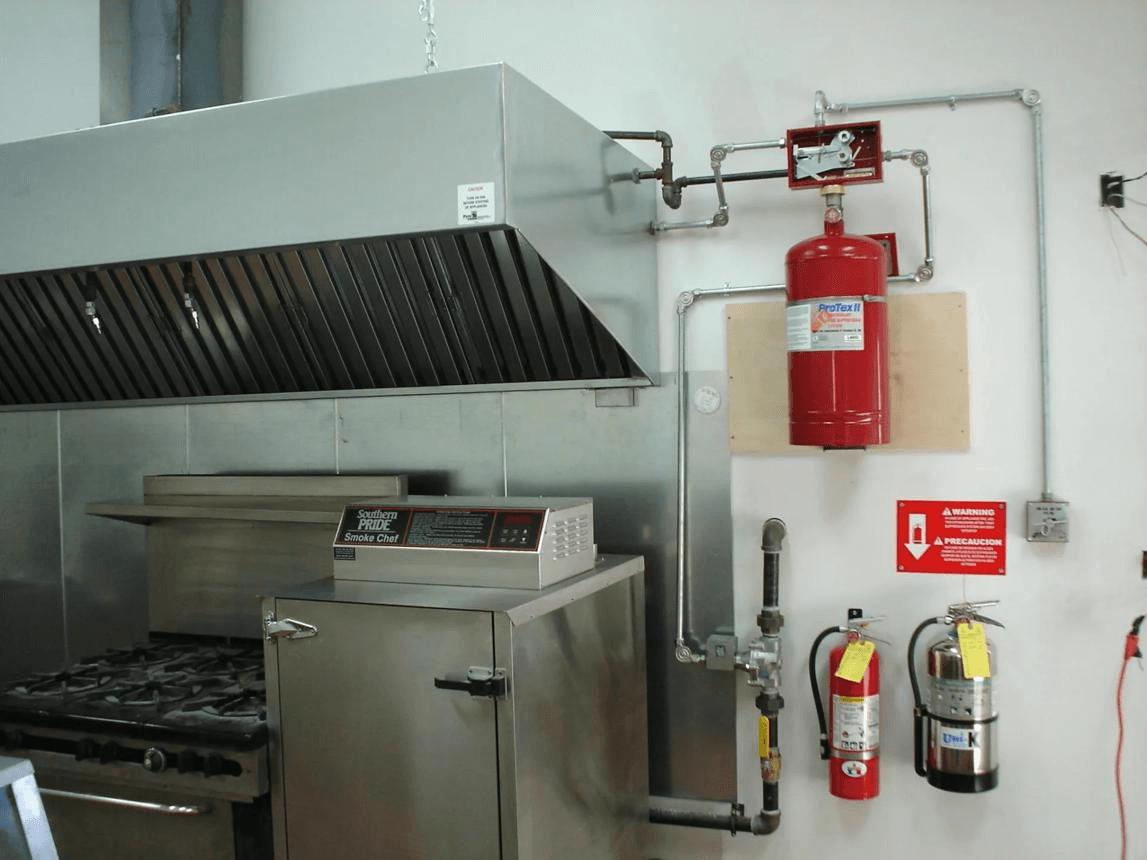
All cooking equipment must be positioned under an approved commercial exhaust hood that meets UAE ventilation standards. In a small kitchen, the exhaust hood design is particularly critical — an oversized hood wastes precious ceiling space while an undersized one creates compliance failures. Work with your municipality-approved ventilation contractor early in the design process.
Food Safety Zone Separation
Even in the smallest kitchen, UAE regulations require clear physical or functional separation between raw food preparation and cooked food handling areas. In a sub-40 sqm kitchen, this is typically achieved through designated color-coded cutting boards, clearly marked work zones, and a logical one-directional workflow that prevents cooked food from ever passing through areas where raw food is handled.
Handwashing Facilities
A dedicated handwashing sink — separate from food preparation sinks — is mandatory in all commercial kitchens. In a small space, this sink is often positioned at the entrance to the kitchen so that staff wash their hands immediately upon entry, before touching any food or equipment.
Drainage and Flooring
Commercial kitchen flooring must be non-slip, non-porous, and easy to clean. Floor drains must be positioned under all wet equipment and at regular intervals throughout the kitchen. In a small space, the drainage design must be planned as part of the layout rather than as an afterthought.
Special Considerations: Restaurant Kitchen Layout Small Space UAE for Cloud Kitchens
Cloud kitchens — delivery-only food operations — have specific layout requirements that differ from dine-in restaurants. If you’re planning a cloud kitchen in a small UAE space, here’s what you need to know:
Multiple Brand Operations
Many cloud kitchen operators run multiple food brands from a single small kitchen. This requires extremely disciplined zone planning — each brand needs clearly designated prep and packaging zones to prevent cross-contamination and maintain brand-specific food quality standards.
Packaging and Dispatch Zones
Unlike dine-in restaurants, cloud kitchens need a dedicated food packaging and dispatch zone. Even in a small space, this area must be clearly defined, well-lit, and positioned near the kitchen exit for efficient handoff to delivery riders. A minimum of 2–3 sqm should be reserved for this function.
👉 Explore Food Holding and Warming Equipment for Cloud Kitchen Order Management
High-Efficiency Storage Solutions
With no dining area to spread across, cloud kitchens must store everything — raw ingredients, packaging materials, cleaning supplies, and equipment — within the kitchen footprint. Vertical storage solutions, wall-mounted shelving, and intelligent inventory management are essential in small cloud kitchen spaces.
👉 Browse Kitchen Supplies & Storage Solutions for Cloud Kitchens
Pro Design Tips for Restaurant Kitchen Layout Small Space UAE Success
Beyond the fundamentals of layout configuration and equipment selection, these professional design tips can make the difference between a small kitchen that feels efficient and one that feels frustrating:
Go Vertical — Use Your Full Wall Height
The floor space in a small kitchen is limited, but the walls are free real estate. Wall-mounted shelving, pot racks, magnetic knife holders, and overhead storage units can dramatically increase your total storage capacity without consuming an inch of floor space. UAE municipalities permit wall-mounted storage provided it’s properly secured and maintained hygienically.
Standardize on One Countertop Height
Varying countertop heights in a small kitchen create awkward transitions and reduce the flexibility of your work surfaces. Standardize on a single countertop height (typically 900mm for most food preparation tasks) so that equipment can be repositioned as your menu evolves without requiring structural changes.
Invest in Multi-Function Equipment
For restaurant kitchen layout small space UAE projects, multi-function equipment is worth its premium price. A combi oven that steams, bakes, and roasts replaces three single-function appliances. A commercial mixer that also slices and grates eliminates the need for multiple prep machines.
👉 Shop Combi Ovens & Multi-Function Commercial Ovens – UAE
👉 Explore Convection Ovens for Space-Efficient Commercial Baking
Plan for Your Cleaning and Sanitation Workflow
In a small kitchen, cleaning is not an afterthought — it’s an operational activity that happens constantly throughout the service period. Design your layout so that the dishwashing station is easily accessible from all prep and cooking zones, and ensure there’s always a clear path from dirty equipment to the wash station without crossing clean food preparation areas.
Use Light Colors and Adequate Lighting
Light-colored walls, ceilings, and equipment surfaces make a small kitchen feel significantly larger and also make it easier to spot cleanliness issues during self-inspection. LED strip lighting under wall-mounted shelves and above work surfaces maximizes visibility without consuming ceiling space with light fixtures.
Think About the ‘Mise en Place’ Philosophy
The French culinary concept of ‘mise en place’ — having everything in its place before service begins — is not just a cooking technique; it’s a spatial organization philosophy. Designing your small kitchen so that every ingredient, tool, and piece of equipment has a designated place dramatically reduces the chaos of service and keeps your compact space organized even under pressure.
read more : Ghost Kitchen UAE Setup Cost & How to Open One: Licenses, Costs, and Complete Guide
Frequently Asked Questions
1. What is the minimum size for a commercial kitchen in UAE?
There is no single universally specified minimum size for commercial kitchens across all UAE municipalities, but most require a minimum of 15–20 sqm for a basic food preparation operation. However, practical minimum sizes depend on your menu complexity and production volume. A simple single-concept cloud kitchen may function in 15 sqm, while a full-service restaurant kitchen typically requires 30–50 sqm minimum.
2. Can I use residential kitchen equipment in my UAE commercial kitchen?
No. All UAE municipalities require commercial-grade equipment in licensed food businesses. Domestic appliances do not meet the hygiene, durability, and safety standards required for commercial food operations and will result in a failed health inspection.
3. What are the best kitchen layouts for a small restaurant under 40 sqm in the UAE?
The best layouts for restaurant kitchen layout small space UAE under 40 sqm are the galley (parallel) layout, the L-shaped layout, and the zone-based layout. The right choice depends on your kitchen’s shape, staff count, and menu complexity.
4. How much does it cost to equip a small commercial kitchen in UAE?
Equipping a small commercial kitchen in the UAE (under 40 sqm) typically costs between AED 20,000 and AED 80,000 for the equipment alone, depending on the type of cuisine, quality of equipment, and whether you choose new or refurbished items. Full kitchen fit-out including construction, ventilation, and utilities can range from AED 50,000 to AED 200,000+.
5. Do I need a HACCP plan for a small kitchen in UAE?
HACCP plans are mandatory for medium to large food operations and food manufacturers in the UAE. Smaller operations — particularly cafés, small restaurants, and home-based businesses — may not be required to submit formal HACCP documentation, but understanding and applying HACCP principles is always expected during municipality inspections.
6. What is the ideal aisle width for a small commercial kitchen?
UAE municipality guidelines generally require a minimum aisle width of 900mm for single-staff movement and 1200mm where two staff work side by side. In a small kitchen under 40 sqm, the galley layout typically maintains a 1000–1200mm central aisle, which is sufficient for most operations while maximizing equipment placement on both walls.
7. How do I separate raw and cooked food zones in a small kitchen?
In a small kitchen, separation of raw and cooked food zones is achieved primarily through workflow design — a one-directional flow from receiving through prep, cooking, and plating ensures food never moves backward. Color-coded cutting boards (red for raw meat, green for vegetables, yellow for cooked food) and clearly marked work surfaces reinforce this separation without requiring physical barriers.
8. What commercial refrigeration is best for a small UAE kitchen?
For small UAE commercial kitchens, undercounter refrigerators and freezers, work-top refrigerators, and undercounter chillers are the most space-efficient options. They provide full commercial cold storage capacity while doubling as work surfaces, saving significant floor space.
👉 Shop Undercounter & Work Top Refrigeration for Small Kitchens
9. What is a combi oven and why is it important for small UAE kitchens?
A combi oven combines a conventional oven, a steam oven, and a convection oven in a single unit. For small UAE kitchens, this multi-function capability means one combi oven can replace three separate appliances, dramatically reducing equipment footprint while expanding culinary versatility. Combi ovens are particularly valuable for cloud kitchens and small restaurants with diverse menus.
👉 Explore Combi Ovens & Commercial Oven Solutions – Al Razana UAE
10. How do I make my small UAE kitchen feel more efficient?
Key strategies include: going vertical with wall-mounted storage, standardizing work surface heights, investing in multi-function equipment, applying the mise en place philosophy to your setup, using light colors and adequate task lighting, and rigorously following a zone-based layout that eliminates unnecessary movement during service.
11. Can I run multiple food brands from a small cloud kitchen in UAE?
Yes, multi-brand cloud kitchen operations are permitted in the UAE, but each brand should have clearly designated preparation and packaging zones to meet food safety requirements. Ensure your layout explicitly accommodates these zones during the design phase, as retrofitting them later in a small space is extremely difficult.
12. Where can I buy compact commercial kitchen equipment in UAE?
Al Razana is a leading commercial kitchen equipment supplier in the UAE, offering a comprehensive range of compact and full-size restaurant kitchen equipment including undercounter refrigeration, countertop cooking equipment, combi ovens, compact dishwashers, stainless steel fabrication, and more — all compliant with UAE municipality standards.
👉 Shop All Compact Commercial Kitchen Equipment – Al Razana UAE
Conclusion: Small Space, Big Potential — Master Your Restaurant Kitchen Layout
A compact commercial kitchen in the UAE is not a limitation — it’s an opportunity to demonstrate that great food, operational excellence, and regulatory compliance don’t require unlimited space. With the right approach to restaurant kitchen layout small space UAE planning, a 30–40 sqm kitchen can be as productive, compliant, and profitable as one three times its size.
Throughout this guide, we’ve covered the most effective layout configurations for compact kitchens, the step-by-step planning process, the equipment strategies that maximize efficiency in small spaces, UAE municipality compliance requirements, and expert design tips that professional kitchen consultants use every day. Armed with this knowledge, you’re ready to transform your small space into a high-performing commercial kitchen.
The most important investment you can make at this stage is in the right commercial kitchen equipment — compact, multi-function, municipality-approved tools that work harder in less space. Choosing quality restaurant kitchen equipment from a trusted UAE supplier is the single decision that separates successful small kitchen operations from struggling ones.
We’d love to hear from you — share this guide with fellow food entrepreneurs, leave a comment about your small kitchen planning experience, or explore our related articles on kitchen equipment, food business licensing, and commercial kitchen design. Every successful food business starts with one smart decision. Make yours today.
👉 Explore All Commercial Kitchen Equipment – Al Razana UAE
👉 Shop Compact Cooking Equipment – Countertop Ranges, Fryers & Grills
👉 Browse Undercounter & Work-Top Refrigeration Solutions