
Restaurant Energy Cost Reduction UAE DEWA: Cut Bills Without Losing Output
8 May 2026
Open any Dubai or Abu Dhabi restaurant’s monthly P&L and there it is — a line item that nobody talks about at industry events but everyone loses sleep over: the electricity bill. In the UAE, where commercial kitchen equipment runs around the clock in 45°C ambient heat and where DEWA’s tiered commercial tariff system can punish high-consumption operations severely, energy is often a restaurant’s third-largest cost after rent and labour. For many full-service restaurants, it quietly consumes 6–10% of total revenue. Yet it is also one of the most controllable cost lines in the business — if you know where to look and what to do. That’s exactly what this guide on restaurant energy cost reduction UAE DEWA is designed to show you.
The UAE’s climate makes energy efficiency in commercial kitchens uniquely challenging. HVAC systems work overtime from May through October. Refrigeration equipment struggles to maintain temperatures against ambient heat that strains compressors and seals. Cooking equipment generates heat that then has to be removed by extract ventilation and air conditioning — a double energy burden unlike anything operators experience in temperate climates. But the same challenge creates enormous opportunity: because the baseline consumption is so high, even modest improvements in restaurant energy cost reduction UAE DEWA can translate into AED tens of thousands in annual savings for a typical full-service restaurant.
Understanding DEWA’s Commercial Tariff Structure for UAE Restaurants
How DEWA Bills Commercial F&B Operations
Before you can reduce your energy bill, you must understand exactly how restaurant energy cost reduction UAE DEWA works at the billing level. DEWA (Dubai Electricity and Water Authority) charges commercial customers on a tiered consumption basis, with rates escalating as monthly consumption increases. As of the most recent published tariff schedule, commercial electricity rates range from approximately 23 fils/kWh at the lowest consumption tier to 38 fils/kWh at the highest tier.
This tiered structure means that a restaurant consuming 50,000 kWh per month is paying significantly more per unit than one consuming 30,000 kWh — and a 15% reduction in consumption could drop the operation into a lower tariff band, compounding the financial benefit.
read more : Hotel Kitchen Preventive Maintenance Plan: How to Build an F&B Schedule
DEWA’s Peak Demand Charge: The Hidden Cost Most Operators Miss
Beyond consumption charges, DEWA levies a peak demand charge avoidance that catches many restaurant operators by surprise. This charge is based on your maximum power demand (measured in kVA) recorded during any 30-minute window in the billing period. If your kitchen runs all ovens, fryers, and HVAC at full capacity simultaneously — as often happens during a busy lunch rush — you create a high peak demand reading that elevates your bill for the entire month.
The financial implication is significant: reducing your peak demand by 15–20% can lower this component of your DEWA bill by a proportional amount, entirely independently of any reduction in total consumption.
| DEWA Charge Component | Driver | Reduction Strategy |
| Consumption charge (fils/kWh) | Total kWh used per month | Efficiency upgrades, behavioural change |
| Peak demand charge (kVA) | Maximum 30-min power demand | Load staggering, equipment scheduling |
| Fixed service charge | Connection size | Right-size your connection |
| Reactive power charge (KVAR) | Power factor below 0.9 | Power factor correction capacitors |
Restaurant Energy Cost Reduction UAE DEWA: Starting with a Kitchen Energy Audit
What Is a Kitchen Energy Audit?
A kitchen energy audit is a systematic assessment of all energy-consuming equipment and systems in your restaurant, designed to identify where energy is being used, wasted, and where the highest-ROI reduction opportunities exist. For UAE restaurants pursuing restaurant energy cost reduction UAE DEWA, an energy audit is the essential first step — without baseline data, you are guessing at solutions.
A thorough kitchen energy audit covers: electricity consumption by equipment category, refrigeration performance under UAE summer conditions, HVAC load and efficiency, lighting systems and control strategies, equipment idle time and standby consumption, and peak demand patterns. It should produce a prioritised action plan with estimated costs, savings, and payback periods for each measure.
How to Conduct a DIY Energy Audit in Your UAE Restaurant
1. Collect 12 months of DEWA bills: Map your consumption by month to identify seasonality patterns and peak months (typically June–September in the UAE).
2. Inventory all equipment: List every piece of electrical equipment with its rated wattage. Your manufacturer spec sheets will have this data.
3. Estimate operating hours: For each piece of equipment, estimate actual operating hours per day. Account for standby vs active consumption.
4. Calculate theoretical consumption: Multiply watts × hours × 30 days / 1000 to get kWh. Compare this theoretical figure to your actual DEWA bill.
5. Identify the gap: The difference between theoretical and actual consumption often reveals phantom loads, equipment running when it shouldn’t, or refrigeration systems working harder than expected.
6. Prioritise by consumption magnitude: Focus first on the equipment categories consuming the most energy — typically HVAC (35–45%), refrigeration (20–30%), and cooking equipment (20–25%).
🧊 Audit your cold chain efficiency first — upgrade to our energy-optimised range ofRefrigeration Equipment
Restaurant Energy Cost Reduction UAE DEWA: Commercial Cooking Equipment Efficiency
The Case for Energy Star Equipment in UAE Commercial Kitchens
Energy Star equipment ROI in UAE commercial kitchens is typically faster than in most global markets because of two factors: the high DEWA tariff rates and the heavy usage intensity in UAE operations. An Energy Star-certified commercial oven or fryer typically uses 15–30% less energy than a standard commercial-grade equivalent. Over a 5-year equipment lifecycle, this saving can amount to AED 15,000–40,000 per unit in a high-use UAE kitchen.
When purchasing new cooking equipment, always compare the Energy Star annual energy consumption figure (kWh/year) between models. The price premium for Energy Star equipment is typically 10–20%, but the payback period in UAE conditions is often 18–36 months — making it one of the highest-ROI investments available to restaurant operators.
| Equipment Category | Standard Unit (kWh/day) | Energy Star (kWh/day) | Annual Saving (AED) | Payback Period |
| Commercial Convection Oven | 18–24 | 13–17 | AED 2,800–4,500 | 2–3 years |
| Commercial Fryer | 14–20 | 10–14 | AED 2,200–3,800 | 2–3 years |
| Combi Oven (6 tray) | 22–30 | 15–22 | AED 3,500–5,500 | 2.5–4 years |
| Commercial Dishwasher | 8–15 | 5–9 | AED 1,800–3,600 | 1.5–2.5 years |
| Refrigerated Prep Table | 10–16 | 7–11 | AED 1,500–2,800 | 2–3 years |
🔥 Upgrade to high-efficiency cooking solutions — browse our full range of Combi Ovens
⚡ Reduce fryer energy costs with our energy-efficient Commercial Fryers
Operational Practices That Reduce Cooking Equipment Energy Use
Equipment efficiency ratings are only half the story. How your team operates that equipment determines the real-world energy consumption. These operational practices deliver immediate results without any capital investment:
• Batch cooking: Fill ovens to capacity whenever possible. A half-loaded commercial oven uses almost the same energy as a full oven. Plan prep schedules to maximise batch sizes.
• Equipment warm-up discipline: Many commercial ovens and grills reach operating temperature in 15–20 minutes. Eliminate the habit of turning on equipment at opening time regardless of when it’s actually needed.
• Turn-off protocols: Establish written checklists for equipment shutdown sequences during service breaks and at close. A commercial fryer left at temperature overnight can consume 8–10 kWh unnecessarily.
• Combi oven vs. convection oven strategy: Combi ovens cook faster at lower temperatures using steam injection. For moisture-sensitive dishes, combi cooking reduces cooking time by 20–30%, directly reducing energy consumption.
read more : Hotel Kitchen Operating Cost Reduction UAE: How F&B Managers Save 20%
LED Lighting Payback: A Quick Win for Restaurant Energy Cost Reduction UAE DEWA
Why LED Lighting Is the Fastest Payback in UAE Restaurants
In the hierarchy of restaurant energy cost reduction UAE DEWA measures, LED lighting payback stands out for its combination of low capital cost, zero operational change, and near-immediate financial return. UAE restaurants that have converted from fluorescent or halogen lighting to LED systems report energy savings of 50–70% on lighting circuits alone. Given that many restaurants run ambient lighting for 14–16 hours per day, this is a substantial saving.
A typical full-service restaurant of 200 sqm with mixed halogen and fluorescent lighting carries a lighting load of 8–15 kW. Converting to LED can reduce this to 3–5 kW. At DEWA’s commercial rate of 32 fils/kWh (mid-tier), operating 15 hours per day, 365 days per year, the annual saving ranges from AED 12,000 to AED 25,000. Most LED retrofit projects pay back within 12–24 months in Dubai operating conditions.
LED Lighting Implementation Strategy
7. Audit current lighting: Count all fixtures by type and wattage. Include kitchen, dining, storage, and external signage.
8. Calculate consumption: Multiply total watts × operating hours × 365 / 1000 for annual kWh.
9. Source LED equivalents: Ensure replacement LEDs match the colour temperature (CCT) of your existing lighting to maintain ambience. Restaurants typically use 2700–3000K (warm white) for dining areas.
10. Install occupancy sensors: In storage areas, prep kitchens, and back-of-house, install occupancy sensors that automatically turn lights off when areas are unoccupied.
11. Daylight controls: For restaurants with significant natural light, install daylight sensors on circuits near windows to automatically dim artificial lighting when natural light is sufficient.
Restaurant Energy Cost Reduction UAE DEWA: Peak Demand Charge Avoidance
Understanding the Peak Demand Penalty
As outlined earlier, DEWA’s peak demand charge avoidance requires a specific operational strategy. The key principle is to prevent all your high-wattage equipment from operating simultaneously. In a commercial kitchen, the worst scenario is when the lunch service begins: ovens pre-heat, fryers heat fresh oil, the dishwasher starts its first cycle, and the HVAC system — sensing the sudden heat load from cooking — ramps up simultaneously. This simultaneous peak can set a demand charge ceiling for the entire month.
Practical Peak Demand Management Strategies
• Staggered equipment start-up: Create a written start-up sequence that staggers the power-on of major equipment by 10–15 minutes. Start HVAC first, then refrigeration checks, then cooking equipment in priority order.
• Pre-service prep scheduling: Complete as much pre-service cooking as possible before the peak service window. Reduce the number of pieces of cooking equipment at full load simultaneously during peak service.
• Dishwasher scheduling: Avoid running the commercial dishwasher during the first 30 minutes of peak service. Accumulate ware for the first rush, then run during the first natural service lull.
• HVAC pre-cooling: In UAE conditions, pre-cool the dining space to 22–23°C before service begins. The HVAC system can then maintain temperature on reduced load during service rather than fighting to cool a hot room simultaneously with all kitchen equipment operating.
🍽️ Optimise your dishwashing energy profile — explore our efficientDishwasher Equipment
Sub-Metering by Kitchen Zone: Advanced Restaurant Energy Cost Reduction UAE DEWA
What Is Sub-Metering and Why Does It Matter?
Sub-metering by kitchen zone means installing individual energy meters on different circuits or zones within your restaurant — typically separating HVAC, cooking equipment, refrigeration, lighting, and front-of-house into independently monitored circuits. This transforms your energy management from guesswork into precision. Without sub-metering, you receive one DEWA bill for the entire property and have no way to identify which equipment or zone is responsible for unexpected spikes or inefficiencies.
For restaurants pursuing restaurant energy cost reduction UAE DEWA seriously, sub-metering is the infrastructure that makes everything else possible. It enables you to verify the actual energy savings from any equipment upgrade, identify faulty equipment drawing excess power, hold different departments or kitchen sections accountable for consumption targets, and model the impact of operational changes before committing to capital expenditure.
Implementing Sub-Metering in Your UAE Restaurant
| Zone | Typical % of Total Consumption | Key Equipment | Monitoring Priority |
| HVAC Systems | 35–45% | Air handling units, FCUs, extract fans | High |
| Refrigeration | 20–30% | Walk-in chillers, reach-in units, display cases | High |
| Cooking Equipment | 18–25% | Ovens, fryers, ranges, grills | High |
| Dishwashing & Laundry | 5–10% | Dishwashers, washing machines | Medium |
| Lighting | 3–8% | All lighting circuits | Medium |
| Small Appliances | 2–5% | Blenders, coffee machines, misc. | Low |
Smart sub-metering systems like Schneider Electric’s EcoStruxure or Siemens Desigo can connect to cloud dashboards that generate automated alerts when any zone exceeds its consumption baseline — giving restaurant managers a real-time view of their restaurant energy cost reduction UAE DEWA performance.
Refrigeration Optimisation: A Critical Front in Restaurant Energy Cost Reduction UAE DEWA
Why UAE Refrigeration Systems Work Harder Than Anywhere Else
Dubai’s ambient summer temperatures of 42–45°C create conditions that no refrigeration system is designed for in its standard configuration. Most commercial refrigeration equipment is tested and rated at 25°C ambient. At 42°C, compressors work significantly harder to maintain the same internal temperatures, increasing energy consumption by 25–40% compared to the rated performance.
This is why refrigeration in UAE restaurants is not just an energy concern — it’s a food safety and equipment longevity concern. An overtaxed compressor running continuously at excessive ambient temperatures fails faster and costs more to maintain.
Refrigeration Energy Reduction Strategies for UAE Conditions
• Condenser coil cleaning: Clean refrigeration condenser coils every 4–6 weeks (not quarterly as is standard in cooler climates). Dirty condenser coils are the single biggest cause of excess energy consumption and premature compressor failure in UAE conditions.
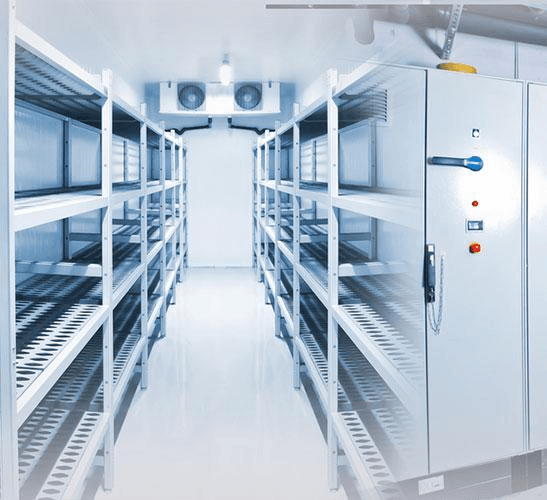
• Door seal integrity checks: Inspect all refrigeration door seals monthly. A degraded seal on a walk-in chiller can increase energy consumption by 10–15% and allow hot humid UAE air to enter the cold space, creating ice build-up.
• Night covers on display cases: If you operate display refrigeration in a café or deli-style operation, install night blinds that close over the open-face display at closing time, reducing the cooling load by 30–40% overnight.
• Temperature setpoint discipline: Every degree warmer you can safely set your refrigeration reduces compressor work. Most ingredients are safely stored at 4°C — operators running at 1–2°C unnecessarily are adding 5–8% to refrigeration energy costs.
• Anti-sweat heater controls: Many commercial display cases run anti-sweat heaters 24/7 to prevent condensation on doors. Installing humidity-sensing controls that activate anti-sweat heaters only when needed can save 15–20% of that circuit’s energy in UAE’s low-humidity conditions during cooler months.
❄️ Invest in energy-efficient cold storage with our range of commercialReach-In Refrigerators
🧊 Maintain precise cold chain standards with our professionalUndercounter Chillers
Restaurant Energy Cost Reduction UAE DEWA: Building a Culture of Energy Consciousness
The Human Factor in Energy Reduction
Every energy management strategy described in this guide depends ultimately on the behaviour of your staff. A perfectly optimised kitchen with Energy Star equipment will underperform its potential if staff leave equipment on during prep breaks, prop open walk-in cooler doors while taking out ingredients, or run the dishwasher half-loaded to save time. Building energy consciousness into your restaurant culture is not optional — it is the multiplier that determines whether your capital investments deliver their projected returns.
read more : Restaurant Kitchen Layout Small Space UAE: How to Plan Under 40 sqm
Practical Energy Culture Initiatives
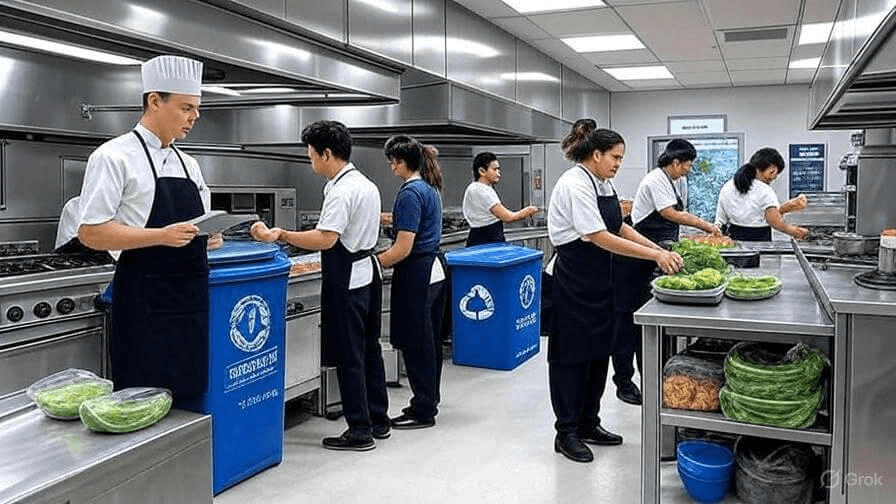
• Energy champions: Designate one staff member per shift as the ‘energy champion’ responsible for walking the kitchen at defined intervals to check for waste. Rotate this role to build awareness across the team.
• Visual reminders: Place laminated reminder cards at every piece of major equipment specifying when to turn it on and off. Make the cost visible: ‘This fryer costs AED 12/hour to run. Turn off when not in use.’
• Monthly energy scorecard: Share your DEWA consumption data with the team monthly. Celebrate months where consumption targets were met. Set monthly reduction goals that the team can influence.
• Incentive schemes: Some UAE restaurant groups offer small team bonuses when monthly energy consumption falls below a defined target. Even an AED 500 team bonus is dwarfed by the AED 5,000–10,000 in monthly savings it incentivises.
🍳 Equip your energy-conscious kitchen with our full range of professionalCooking Equipment
Restaurant Energy Cost Reduction UAE DEWA: The Action Plan
A Prioritised 90-Day Energy Reduction Roadmap
Implementing restaurant energy cost reduction UAE DEWA does not require doing everything at once. Here is a practical 90-day roadmap prioritised by speed of payback:
Days 1–30: Zero-Cost Behavioural Wins
• Create and implement equipment start-up and shutdown checklists
• Introduce peak demand staggering for equipment start-up sequences
• Start a daily energy log tracking DEWA sub-meter readings
• Train all staff on energy conservation basics during a 20-minute briefing
• Inspect all refrigeration door seals and clean all condenser coils
Days 31–60: Low-Cost Upgrades
• Install LED lighting in back-of-house and storage areas (highest ROI first)
• Add occupancy sensors to storage, prep, and staff areas
• Sub-meter at minimum three zones: cooking, refrigeration, and HVAC
• Install HVAC programmable scheduling to align with operating hours
Days 61–90: Capital Investment Review
• Identify the two or three highest-consumption pieces of cooking equipment
• Request Energy Star equivalent quotes and calculate payback periods
• Engage a DEWA-approved energy consultant for a formal audit and power factor assessment
• Review tariff structure to confirm you are on the most appropriate commercial tariff category
Frequently Asked Questions
What is restaurant energy cost reduction UAE DEWA?
Restaurant energy cost reduction UAE DEWA refers to the systematic process of identifying and implementing measures to reduce electricity and water consumption in UAE-based restaurants, thereby lowering monthly DEWA bills. It encompasses equipment upgrades, operational practices, lighting efficiency, peak demand management, and sub-metering strategies.
How much can a UAE restaurant save on its DEWA bill?
Most UAE restaurants that implement a comprehensive energy reduction programme can achieve 15–30% reduction in their electricity bills. For a mid-size restaurant spending AED 25,000–40,000 per month on DEWA, this translates to annual savings of AED 45,000–144,000 — a significant impact on operating profit.
What is a kitchen energy audit and how do I get one?
A kitchen energy audit is a detailed assessment of all energy-consuming systems in a commercial kitchen. You can conduct a basic DIY audit using your DEWA bills, equipment specifications, and operating hour estimates. For a thorough professional audit, engage a DEWA-approved energy management consultant or one of the UAE’s specialist energy management firms such as Etisalat Energy or Enova.
Does Energy Star equipment make a difference in UAE conditions?
Energy Star equipment ROI in the UAE is typically faster than global averages due to high DEWA rates and intensive equipment use. Energy Star certified commercial kitchen equipment typically reduces energy consumption by 15–30% versus standard commercial equivalents. In UAE operating conditions, payback periods of 18–36 months are common.
What is peak demand charge avoidance and why does it matter for UAE restaurants?
Peak demand charge avoidance refers to strategies that prevent your maximum simultaneous power demand from spiking during any 30-minute window, as DEWA charges a peak demand tariff based on this maximum reading. Staggering equipment start-up, scheduling dishwashers away from peak service times, and pre-cooling dining spaces before service all contribute to reducing this charge.
How does sub-metering by kitchen zone help reduce energy costs?
Sub-metering by kitchen zone installs separate energy meters on different circuit groups (HVAC, cooking, refrigeration, lighting) to provide granular consumption data by zone. This enables operators to identify the highest-consumption zones, verify savings from equipment upgrades, detect malfunctioning equipment, and hold different operational areas accountable for energy targets.
What LED lighting payback period should I expect in Dubai?
In Dubai’s operating environment, LED lighting payback from a restaurant-wide LED retrofit is typically 12–24 months. This is based on DEWA’s commercial tariff rates, typical restaurant operating hours of 14–16 hours per day, and the 50–70% energy reduction that LED delivers versus fluorescent and halogen systems.
How often should I clean refrigeration condenser coils in Dubai?
In Dubai’s dusty environment and high ambient temperatures, commercial refrigeration condenser coils should be cleaned every 4–6 weeks — not quarterly as often recommended in cooler climates. Dirty condensers in UAE conditions can increase refrigeration energy consumption by 20–30% and significantly shorten compressor life.
Is DEWA offering any energy efficiency incentives for UAE restaurants?
DEWA periodically offers energy efficiency programmes and may offer subsidised audits or rebate schemes for commercial customers. Visit dewa.gov.ae or contact DEWA’s commercial customer service team to enquire about current schemes. The UAE government’s National Energy Strategy 2050 targets also mean that energy efficiency incentives are expected to expand over the coming years.
What are the most energy-intensive pieces of equipment in a commercial kitchen?
The most energy-intensive commercial kitchen equipment in UAE conditions is typically: HVAC systems (35–45% of total consumption), walk-in refrigeration (15–20%), reach-in refrigeration units (8–12%), commercial ovens and combi ovens (8–12%), commercial fryers (5–8%), and dishwashers (4–7%). Prioritise energy efficiency efforts on these categories first.
Conclusion: Making Restaurant Energy Cost Reduction UAE DEWA Your Competitive Advantage
Energy is no longer a fixed overhead that restaurant operators simply accept. In the UAE’s commercial F&B environment, where DEWA bills represent a significant and highly manageable cost line, treating restaurant energy cost reduction UAE DEWA as a strategic priority is one of the clearest pathways to improved operating margins. The operators who win in this market are not always those with the best location or the most creative menu — they are often the ones who run the leanest, most efficient operations behind the scenes.
The journey starts with a kitchen energy audit — understanding exactly where your energy is going before committing to any investment. It progresses through Energy Star equipment ROI decisions, LED lighting payback projects, peak demand charge avoidance protocols, and ultimately the data-driven precision of sub-metering by kitchen zone. Every step of this journey generates direct financial returns — and in Dubai and Abu Dhabi’s competitive restaurant market, those returns compound into a genuine operational advantage.
The best time to start your restaurant energy cost reduction UAE DEWA programme was when you opened. The second-best time is today. Begin with your DEWA bills, build your audit data, and implement the zero-cost behavioural changes this week. The financial rewards will be immediate and the momentum will carry your operation toward the kind of lean, efficient profitability that sustains businesses for the long term.
💬 Found this guide valuable? Share it with your operations team, leave a comment with your biggest energy challenge, or explore our equipment categories to find the energy-efficient solutions that match your kitchen’s specific needs.
🔥 Upgrade your cooking line with energy-efficientConvection Ovens
❄️ Optimise cold storage energy performance with our professionalWork Top Chillers
🍽️ Reduce hot water and energy use with our range of high-efficiencyUndercounter Dishwashers
🏭 Explore our complete range of professionalRestaurant Kitchen Equipment