How to Open a Specialty Coffee Shop in Dubai: What No One Tells You
23 April 2026
There is something undeniably electric about Dubai’s coffee scene right now. Walk down any street in Jumeirah, Al Quoz, or Downtown and you will find discerning coffee drinkers debating single-origin pour-overs, arguing about water TDS, and hunting for the perfect espresso ratio. The demand for exceptional coffee in this city has never been higher — and for passionate entrepreneurs, the opportunity to open a specialty coffee shop in Dubai has never been more compelling.
But here is what no one tells you before you start: the journey from coffee-lover to licensed specialty coffee business owner in Dubai is complex, layered, and full of decisions that will make or break your concept. From navigating the roastery licence requirements and understanding specialty vs commercial beans to perfecting your water quality TDS setup, designing your bar layout planning, and integrating a smart loyalty app — every detail matters.
This guide gives you the complete, unfiltered roadmap to open a specialty coffee shop in Dubai — the things the official guides miss, the mistakes that cost first-timers months and money, and the expert insights that separate thriving specialty coffee businesses from those that close within a year.
What Makes a Specialty Coffee Shop Different — And Why It Matters for Licensing
Before diving into the licensing process, it is important to define what “specialty coffee” actually means — because the distinction affects how you licence your business, how you source your beans, and even how you design your space. When you decide to open a specialty coffee shop in Dubai, you are entering a different regulatory and operational category than a standard café.
Specialty Coffee Defined
Specialty coffee refers to coffee that has been scored 80 points or above on a 100-point scale by a Specialty Coffee Association (SCA)-certified Q Grader. It is traceable to specific farms or regions, processed with care, and prepared using precise techniques. This is fundamentally different from commercial-grade coffee blended from multiple undisclosed origins.
Specialty vs Commercial Beans: How This Affects Your Business Model
| Factor | Specialty Beans | Commercial Beans |
| Grading | 80+ SCA score | Below 80 |
| Traceability | Farm/region specific | Blended, undisclosed |
| Pricing | Premium — AED 60–200+ per kg | Lower — AED 20–60 per kg |
| Shelf Life | Shorter (freshness critical) | Longer |
| Roast Profile | Light to medium, origin-forward | Medium to dark, consistency-focused |
| Import Requirements | May require specialist importer | Standard food import |
| Customer Expectation | High; education required | Convenience-focused |
Understanding the specialty vs commercial beans distinction is critical before you apply for any licence. If you plan to roast your own beans on-site, you will need a roastery licence in addition to your standard food establishment permit. If you are sourcing pre-roasted specialty beans from licensed roasters in Dubai or importing them, a standard café licence may suffice — but your supplier approvals must be in order.
➡️ read more : How to Open a Café in Abu Dhabi: Licensing, Location & Budget Breakdown
Licences You Need to Open a Specialty Coffee Shop in Dubai
To legally open a specialty coffee shop in Dubai, you will need a combination of approvals from multiple government bodies. Here is a complete breakdown:
1. Dubai Economy and Tourism (DET) Trade Licence
The foundation of any legal business in Dubai. For a café or coffee shop, you will apply under the ‘Restaurant/Café’ activity category. The exact activity code you select determines what you are permitted to do — serving food and beverage on-site, retail sale of coffee products, catering, and so on.
2. Dubai Municipality Food Establishment Permit
This is issued by Dubai Municipality’s Food Safety Department after a physical inspection of your premises. It confirms that your café meets all food safety, hygiene, and infrastructure requirements. Without this permit, you cannot legally serve food or beverages to customers.
3. Roastery Licence (If Roasting On-Site)
If your specialty coffee shop includes an in-house roaster — a growing trend in Dubai’s third-wave coffee scene — you will need a separate roastery licence in addition to your café permit. The roastery licence is issued by Dubai Municipality and requires:
• Dedicated roasting space with appropriate ventilation and exhaust systems
• Smoke management and filtration equipment meeting Dubai Municipality air quality standards
• Separate storage for green (unroasted) and roasted beans
• HACCP documentation specific to roasting operations
• Qualified staff with food safety certification
Obtaining a roastery licence significantly increases your setup costs and timeline but gives you a major competitive advantage — the ability to offer truly fresh, roasted-to-order beans to your customers and wholesale clients.
4. Civil Defence Approval
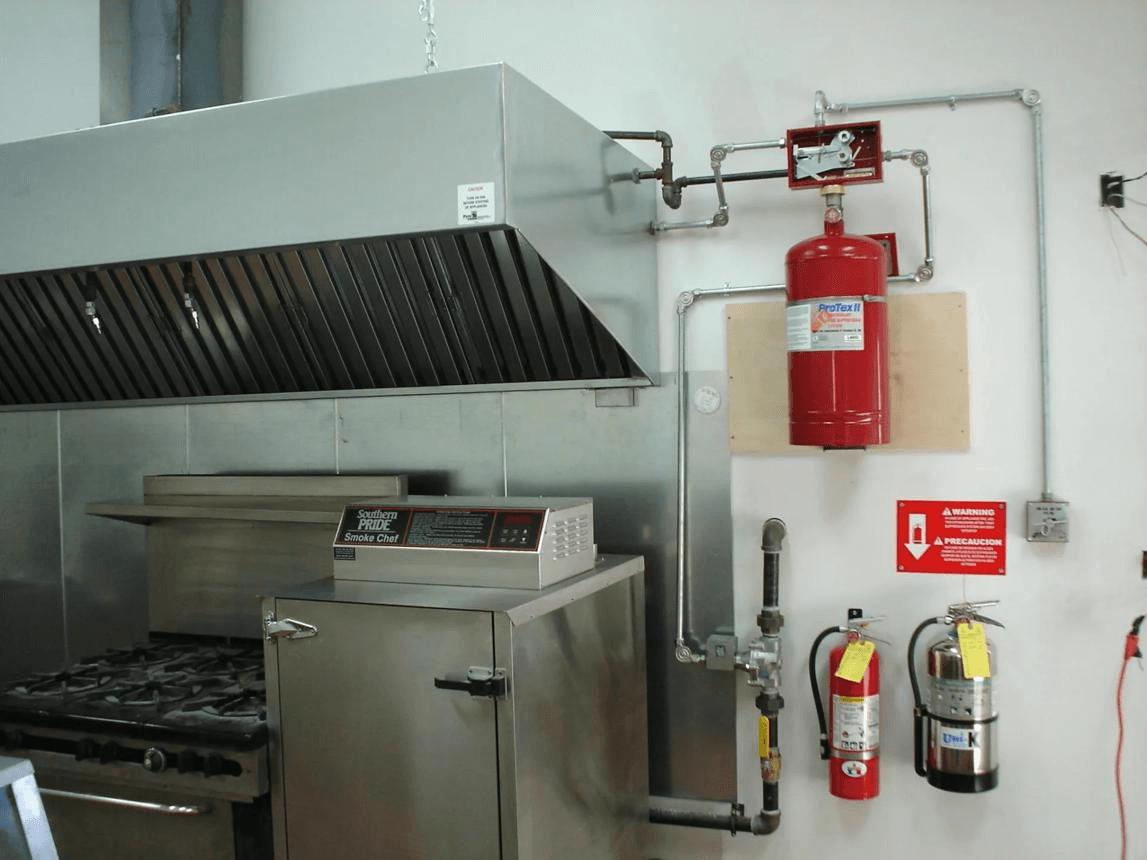
Fire safety approval is mandatory regardless of your café size. This covers sprinklers, fire extinguishers, emergency exits, and signage. If you have an in-house roaster, fire safety requirements are even more stringent due to the fire risk associated with roasting equipment.
5. Signage Permit
Any external signage for your coffee shop must be approved by the relevant authority — Roads and Transport Authority (RTA) or Dubai Municipality depending on location. Your Arabic branding must be accurate and approved.
Step-by-Step: How to Open a Specialty Coffee Shop in Dubai
Here is the step-by-step process every entrepreneur must follow to successfully open a specialty coffee shop in Dubai:
1. Define your concept: Counter-service third-wave café, sit-down specialty experience, roastery-café hybrid, or specialty coffee kiosk.
2. Choose your business structure: LLC (most common for expats), sole establishment, or free zone company.
3. Reserve your trade name with Dubai Economy and Tourism.
4. Secure your location and sign a Memorandum of Understanding (MOU) with your landlord — this is needed for applications.
5. Hire an architect experienced in F&B fit-outs to develop compliant drawings.
6. Submit plans for Dubai Municipality approval before construction begins.
7. Complete your fit-out and install all equipment.
8. Apply for the Dubai Municipality Food Establishment Permit.
9. Pass the pre-opening health inspection.
10. Obtain Civil Defence clearance.
11. Register food handlers and obtain Food Handler Cards.
12. Receive your final DET trade licence.
13. Apply for your roastery licence separately if roasting on-site.
Bar Layout Planning: The Design Decisions That Define Your Open Specialty Coffee Shop Dubai
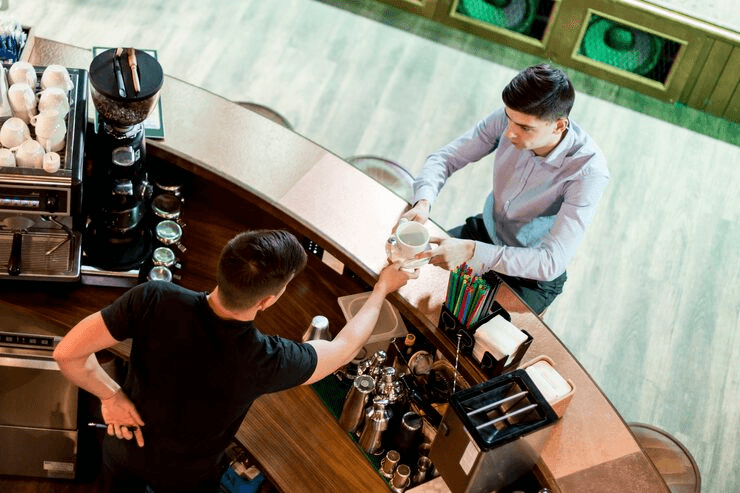
Among all the factors that determine whether your specialty coffee shop succeeds, bar layout planning is perhaps the most underestimated. Your bar is not just where coffee is made — it is the stage on which your entire brand story is performed. Getting bar layout planning right means faster service, lower staff fatigue, better coffee consistency, and a space that customers want to photograph and share.
The Linear Bar Layout
Best for high-volume, counter-service specialty shops. Equipment flows in a straight line: grinder → espresso machine → milk station → handoff point. This is fast, intuitive, and maximises throughput during peak hours.
The Island or Peninsula Bar Layout
An island bar is surrounded by customers on multiple sides, creating a theatrical, interactive experience. This is perfect for the specialty coffee brand that wants the barista’s craft to be visible and central to the customer experience. However, it requires more floor space and careful Dubai Municipality approval for service flow.
The L-Shaped Bar Layout
The most versatile layout for small to medium specialty shops. The L-shape allows separation between espresso and filter coffee stations, which is important when you offer both brew methods. Bar layout planning with an L-shape also makes it easier to position your water quality filtration system where it is accessible to all brewing stations.
Key Equipment Placement Considerations
• Espresso machine should face customers — it is your centrepiece
• Grinders positioned immediately beside espresso machines to minimize workflow distance
• Under-counter refrigerators for milk and cold brew concentrate within arm’s reach of the bar
• Filter brewing stations (V60, AeroPress, Chemex) with dedicated water lines
• Pass-through or dedicated handoff zones to prevent congestion
• Waste and knock boxes positioned to avoid cross-contamination
👉Shop Undercounter Refrigerators for Coffee Bar
👉Explore Undercounter Chillers for Dairy Storage
👉Browse Coffee Machines for Your Specialty Setup
👉Explore Manual Brewing Equipment
👉Shop Coffee & Tea Accessories
Water Quality TDS: The Secret Ingredient in Every Great Specialty Cup
Here is one of those things no one tells you when you plan to open a specialty coffee shop in Dubai: Dubai’s municipal tap water, while safe to drink, is typically not optimal for specialty coffee extraction. Water quality TDS — Total Dissolved Solids — is one of the most critical variables in coffee extraction, and getting it wrong will undermine even the best beans and baristas.
What Is Water Quality TDS and Why Does It Matter?
TDS measures the concentration of dissolved minerals (calcium, magnesium, bicarbonates, and others) in water. The Specialty Coffee Association recommends water with a TDS of 75–175 ppm (parts per million) with a target of 150 ppm for optimal coffee extraction. Water with too-high TDS tastes flat and chalky. Water with too-low TDS (like distilled water) produces sour, under-extracted coffee and can corrode your espresso machine.
Dubai’s Water and What You Need to Do
Dubai’s tap water typically has a TDS ranging from 200 to 600 ppm depending on the supply source and season. This means most specialty coffee shops in Dubai need to invest in a water quality TDS management system. Options include:
• Reverse Osmosis (RO) + Remineralisation: Strips water completely and then adds back precise mineral concentrations. Most control but highest cost (AED 3,000–15,000 for commercial units).
• Inline Filtration + Softening: Reduces TDS and removes scale-forming minerals while retaining some beneficial minerals. More affordable (AED 1,000–5,000).
• Commercial Water Dispensers with Built-in Filtration: Convenient for smaller shops without dedicated plumbing.
Whichever system you choose, your water quality TDS must be tested regularly. Many top-tier specialty coffee shops in Dubai test water at least weekly and adjust filtration systems seasonally. Your espresso machine warranty may also be voided if you use water outside manufacturer-specified TDS ranges — another reason this is non-negotiable.
👉Shop Electric Boilers for Specialty Coffee Brewing
👉Browse Beverage Equipment for Coffee Shops
👉Explore Blenders for Specialty Drinks
Loyalty App Integration: Building Community Around Your Open Specialty Coffee Shop Dubai
In Dubai’s competitive café landscape, the best beans and the most skilled baristas are not enough to guarantee repeat business. Today’s specialty coffee customer in Dubai expects a seamless, connected experience — and that is where loyalty app integration becomes a powerful business tool when you open a specialty coffee shop in Dubai.
Why Loyalty Apps Matter More for Specialty Coffee
Specialty coffee customers are, by nature, more discerning and engaged than average café visitors. They care about their regular order, they appreciate being recognized, and they respond well to exclusive experiences — a new single-origin release, a cupping event invite, an early-access roast. A well-designed loyalty programme speaks directly to these motivations.
Loyalty App Options for Dubai Specialty Coffee Shops
| App/Platform | Best For | Key Feature |
| Stamp Me | Small independent cafés | Simple digital stamp card |
| Square Loyalty | POS-integrated shops | Automatic points on payment |
| Lightspeed | Multi-location specialty brands | Advanced analytics + loyalty |
| Custom App Development | Premium specialty brands | Fully branded experience |
| Beams (local UAE) | UAE-focused customer acquisition | Arabic language support |
What Your Loyalty App Must Integrate With
Loyalty app integration is only as powerful as its connection to your other systems. Key integrations include:
• Point of Sale (POS) System: Seamless earning and redeeming of points without slowing down service.
• CRM: Customer data to personalise communications — birthdays, anniversaries, favourite orders.
• Social Media: Easy sharing of loyalty achievements encourages organic marketing.
• Email/WhatsApp Marketing: Automated messages for new bean arrivals, events, and rewards.
• Delivery Apps: If you offer delivery via Talabat or Careem, ensure loyalty points carry over.
The best specialty coffee shops that open in Dubai and sustain loyal communities treat loyalty app integration not as a discount mechanism but as a conversation tool — a way to deepen the relationship with customers who already love coffee.
➡️ read more : How to Open a Restaurant in Dubai: The Complete 2026 Step-by-Step Guide
Sourcing Specialty vs Commercial Beans: What to Know Before You Sign Your First Contract
One of the most consequential early decisions you will make when you open a specialty coffee shop in Dubai is where and how you source your beans. The specialty vs commercial beans choice defines your product quality, your price point, your brand story, and your supplier relationships for years to come.
Importing Specialty Beans into Dubai
Importing specialty beans requires working with a licensed UAE food importer or being registered as an importer yourself. All coffee entering the UAE must comply with Dubai Municipality import regulations:
• Products must be accompanied by a certificate of origin
• Halal certification required for any food products processed with flavour additives
• Labels must comply with UAE labelling regulations (Arabic + English, allergens, expiry)
• Green (unroasted) coffee beans have specific import codes and may require additional documentation
Working With Local UAE Specialty Roasters
Dubai has a growing ecosystem of specialty roasters — many operating under a roastery licence — who supply cafés with freshly roasted single-origin and blended coffees. The advantage of working with a local roaster is freshness, responsive supply adjustments, and often the opportunity to co-develop exclusive house blends.
Due Diligence on Bean Suppliers
Whether you are importing or buying locally, your specialty vs commercial beans supply chain must be documented. Dubai Municipality expects food businesses to maintain records of all food suppliers. Make sure every bean supplier can provide:
• Valid UAE food trade licence or import permit
• Certificate of origin for beans
• Roast date and lot number documentation for freshness verification
• Clear contract terms including freshness guarantees and return policies
Fit-Out and Equipment: Setting Up Your Specialty Coffee Shop for Success
The right equipment is inseparable from your ability to open a specialty coffee shop in Dubai that consistently produces excellent coffee. Here is a category-by-category equipment checklist:
Espresso and Brewing Equipment
👉Shop Professional Coffee Machines
👉Explore Manual Brewing Equipment
Cold Beverage Equipment
For iced lattes, cold brew, and blended specialty drinks:
👉Shop Cold and Frozen Beverage Dispensers
👉Browse Juicers and Blenders for Café Use
Food Display and Warmer Equipment
If your coffee shop serves pastries or light bites:
👉Shop Food Holding and Warming Line Equipment
👉Explore Convection Ovens for Café Bakery
Refrigeration for Milk, Syrups, and Cold Drinks
👉Shop Undercounter Refrigerators
👉Browse Reach-In Refrigerators
👉Explore Beverage Refrigerators
Ice Equipment
👉Shop Ice Makers for Specialty Coffee Shops
Stainless Steel and Kitchen Supplies
👉Explore Stainless Steel Fabrication for Custom Bar Counters
Dishwashing Equipment
👉Shop Undercounter Dishwashers for Coffee Shops
👉Browse All Dishwasher Equipment
Real Cost Breakdown to Open a Specialty Coffee Shop in Dubai
One of the most common mistakes first-time coffee shop owners make is under-budgeting. Here is a realistic cost breakdown for a 60–100 sqm specialty coffee shop in Dubai when you open a specialty coffee shop in Dubai:
| Cost Item | Estimated Range (AED) |
| DET Trade Licence | 10,000 – 20,000 |
| Dubai Municipality Permit & Inspection | 2,000 – 5,000 |
| Fit-Out Construction | 100,000 – 400,000 |
| Espresso Machine(s) | 20,000 – 120,000+ |
| Grinders (espresso + filter) | 8,000 – 40,000 |
| Refrigeration Equipment | 20,000 – 80,000 |
| Water Filtration System | 3,000 – 15,000 |
| POS + Loyalty App Setup | 3,000 – 15,000 |
| Roastery Equipment (if applicable) | 50,000 – 250,000+ |
| Staff Training (barista + food safety) | 3,000 – 10,000 |
| Initial Bean Inventory | 5,000 – 20,000 |
| Marketing & Brand Launch | 10,000 – 40,000 |
A realistic total investment for a premium specialty coffee shop in Dubai ranges from AED 250,000 to AED 700,000+. A roastery-café hybrid will require significantly more.
Frequently Asked Questions About Opening a Specialty Coffee Shop in Dubai
1. How long does it take to open a specialty coffee shop in Dubai?
From initial licence application to opening day, the process typically takes 4 to 8 months for a specialty coffee shop in Dubai. Adding a roastery licence can extend this timeline by an additional 2 to 4 months due to the additional inspection requirements.
2. Do I need a roastery licence if I import pre-roasted specialty beans?
No. A roastery licence is only required if you roast beans on your premises. If you source pre-roasted beans from a licensed supplier, your standard café trade licence and Dubai Municipality food establishment permit are sufficient.
3. What is the ideal water TDS for specialty coffee in Dubai?
The SCA recommends water quality TDS of 75–175 ppm, with a target of 150 ppm. Dubai tap water typically has a TDS of 200–600 ppm, so most specialty coffee shops require an RO or inline filtration system to achieve the optimal range.
4. Can I sell specialty coffee beans retail in my Dubai café?
Yes, but your DET trade licence must include the ‘Retail Sale of Coffee’ activity. If you are selling beans roasted by you on-site, you also need a valid roastery licence and product labelling must comply with UAE food labelling regulations.
5. What are the best locations to open a specialty coffee shop in Dubai?
Top performing locations for specialty coffee shops in Dubai include Al Quoz (arts and creative district), Jumeirah and Umm Suqeim (affluent residential), Downtown Dubai and DIFC (professionals and tourists), Dubai Design District (D3), and emerging areas like Bluewaters Island and Al Wasl Road.
6. Is bar layout planning checked during the Dubai Municipality inspection?
Yes. Dubai Municipality inspectors evaluate the functional flow of your bar layout planning as part of the fit-out inspection — particularly the separation of food preparation zones, handwashing access, and waste management positioning. Non-compliant layouts will require modification before approval is granted.
7. What loyalty app do most Dubai coffee shops use?
There is no single dominant loyalty app in Dubai’s specialty coffee scene — choices vary based on POS system, budget, and brand goals. Popular options include Lightspeed, Square Loyalty, and locally developed solutions. Some premium specialty brands develop custom apps to fully control the customer experience.
8. Can a foreigner own 100% of a specialty coffee shop in Dubai?
Under recent UAE commercial law reforms, foreigners can own 100% of many onshore food and beverage businesses in Dubai. The specific rules depend on the activity code and the emirate, so consulting a business setup specialist before applying is strongly recommended.
9. Do I need HACCP for a specialty coffee shop in Dubai?
Yes. All food and beverage establishments in Dubai, including specialty coffee shops, must implement a documented HACCP plan. For a coffee-only concept with minimal food handling, the HACCP plan is relatively straightforward, but it must be in place before your Municipality inspection.
10. What are the labelling requirements for specialty coffee products sold in Dubai?
Any packaged coffee products — beans, ground coffee, capsules — sold in your specialty coffee shop must be labelled in Arabic and English, with the country of origin, roast date, net weight, allergen information, and manufacturer details. This applies whether you are labelling under your own roastery licence or retailing another brand’s products.
11. What is the typical profit margin for a specialty coffee shop in Dubai?
Specialty coffee shops in Dubai that manage costs effectively typically achieve gross margins of 65–80% on beverages. Net profit margins (after rent, staff, and overheads) generally range from 10–20% for well-run independent specialty shops. Locations with high foot traffic and strong average ticket values (above AED 45) tend to be most profitable.
12. What training do baristas need to work in a Dubai specialty coffee shop?
All food handlers, including baristas, must hold a valid Dubai Municipality Food Handler Card. Specialty baristas are also expected to have formal SCA (Specialty Coffee Association) training or equivalent. The most respected baristas in Dubai’s specialty scene hold SCA Barista Skills certifications and have experience with manual brewing techniques.
Conclusion: The Specialty Coffee Opportunity in Dubai Is Waiting for You
Dubai’s specialty coffee culture is maturing rapidly — and there has never been a better moment for passionate, prepared entrepreneurs to open a specialty coffee shop in Dubai. But the difference between the coffee shops that become beloved community institutions and those that close within a year is not the quality of the beans alone. It is the completeness of the preparation: the correct licences (including the roastery licence if needed), the investment in water quality TDS management, the thoughtful bar layout planning, a clear position in the specialty vs commercial beans debate, and a smart loyalty app integration strategy that keeps customers coming back.
Every detail covered in this guide is something you can act on today. Start with the licensing process, invest in the right equipment, and build a customer experience that your community in Dubai will love for years to come.
Found this guide useful? Share it with a fellow coffee entrepreneur. Have questions or your own experience opening a coffee shop in Dubai? Leave a comment below — your insights help our community grow.
Ready to equip your specialty coffee shop? Explore our full product range:
👉Browse All Coffee Makers & Equipment
👉Shop Professional Coffee Machines
👉Explore All Beverage Equipment