High Volume Catering Kitchen Management UAE: How to Handle 500+ Guests
28 April 2026
Picture this: 600 guests seated across a grand ballroom in a Dubai convention center. The clock is ticking toward service time. In the kitchen, 30 chefs are working at full speed across a dozen stations. The executive chef watches the timeline, earpiece in, communicating with front-of-house, coordinating plating for the first course. One delayed station, one equipment failure, one miscalculation on portion count — and the entire event unravels. This is the high-stakes reality of high volume catering kitchen management in the UAE, where events of 500, 1,000, or even 5,000 guests are a regular occurrence.
The UAE’s event and hospitality landscape is unlike almost anywhere else on the planet. From lavish wedding celebrations in Abu Dhabi’s luxury hotels to corporate galas in Dubai’s world-class convention centers, from government state dinners to international sporting event hospitality suites — the scale and prestige of events requiring expert high volume catering kitchen management is extraordinary. And behind every flawlessly executed event is a kitchen operation that has mastered the science and art of cooking and serving food to hundreds or thousands of guests simultaneously.
In this comprehensive guide, we explore every dimension of high volume catering kitchen management — from pre-event planning and equipment selection to real-time kitchen coordination and post-event evaluation. Whether you are a catering manager preparing for your first 500-person event or a seasoned executive chef looking to refine your systems for handling 2,000+ guests, this article will give you the tools, insights, and strategies you need to succeed.
What Is High Volume Catering Kitchen Management?
High volume catering kitchen management is the systematic planning, coordination, and execution of food production and service for large-scale catering events — typically defined as events serving 200 or more guests, with true high-volume operations involving 500 guests or more. It encompasses everything from menu design and ingredient procurement through to kitchen logistics, equipment deployment, staffing management, and service execution.
What separates high volume catering from regular restaurant or hotel dining service is the simultaneity challenge: unlike a restaurant where dishes are prepared and served on an ongoing basis throughout service, a large catering event requires that a specific number of identical dishes be ready at precisely the same moment. This fundamental difference demands a completely different approach to kitchen planning, equipment selection, and team organization.
In the UAE’s demanding hospitality environment, high volume catering kitchen management also requires deep cultural sensitivity, awareness of dietary requirements across diverse international guest lists, adherence to strict food safety regulations enforced by Dubai Municipality and Abu Dhabi’s relevant authorities, and the operational flexibility to serve premium food quality at scale.
read more : Restaurant Kitchen Layout Small Space UAE: How to Plan Under 40 sqm
Pre-Event Planning: The Foundation of High Volume Catering Kitchen Management
Every successful large-scale catering event is won or lost in the planning phase. The best high volume catering kitchen management professionals know that what happens in the kitchen on event day is almost entirely determined by the quality of preparation in the weeks and days beforehand.
Menu Design for High Volume Events
Menu design for high volume events requires a completely different mindset than restaurant menu engineering. Every dish must be evaluated not just on taste and presentation appeal, but on its technical scalability — how well it maintains quality when produced in large batches, how it holds during the service period, and how quickly and consistently it can be plated and served.
The most successful high-volume menus in UAE catering tend to share certain characteristics: they feature dishes that can be substantially prepped in advance, they avoid highly delicate elements that deteriorate quickly after plating, and they incorporate a balance of proteins, carbohydrates, and vegetables that can be produced using different equipment streams simultaneously. The best high volume catering kitchen management teams work closely with their clients to design menus that are both impressive and operationally achievable at scale.
Detailed Timeline and Production Scheduling
A production schedule for a 500+ guest event should be a highly detailed document specifying exactly which dishes will be prepared at which times, by which stations, using which equipment. This reverse-engineered timeline starts from the service time and works backward, accounting for every cooking process, holding time, plating activity, and transport step.
The production schedule also needs to account for the capacity of your specific equipment — how many covers can your oven bank produce per hour? How long does your cold line take to plate 600 starters? What is the realistic throughput of your food holding and warming equipment? These numbers must be calculated precisely, not estimated.
🍽️ Keep large-batch food at perfect serving temperature:Explore Food Holding and Warming Line Equipment
Essential Equipment for High Volume Catering Kitchen Management
Executing a flawless 500+ guest event is impossible without the right equipment. The equipment arsenal for high volume catering kitchen management must be carefully selected for capacity, reliability, versatility, and speed. The following sections explore the key equipment categories that make or break large-scale catering operations.
High-Capacity Ovens: The Engine of Your Kitchen
Ovens are the most critical piece of equipment in any high-volume catering kitchen. When you need to produce 150 identical chicken portions simultaneously, or bake 300 individual pastry items to precisely the same color and texture, your oven capacity and consistency are everything. The UAE’s leading catering operations rely on three primary oven types for high-volume work: combi ovens, convection ovens, and bakery deck ovens.
♨️ The professional’s choice for large-scale food production:Browse Combi Ovens for High-Volume Catering
🔥 Fast, even cooking for high-volume operations:Explore Convection Ovens for Catering Events
🥐 Perfect for high-volume baked goods and pastries:Professional Bakery Deck Ovens for Large Events
Why Combi Ovens Are Essential for 500+ Guest Events
Combi ovens are the undisputed workhorses of high volume catering kitchen management. Their ability to combine steam and convection heat gives chefs precise control over the cooking environment, producing consistent results at scale that would be impossible to achieve with conventional ovens. The ability to cook large batches of proteins to precise core temperatures — and then switch to a gentle hold mode — is transformational for catering operations. Leading UAE catering teams running 500+ guest events typically deploy multiple large-capacity combi ovens in stacked configurations to maximize throughput within available kitchen footprint.
Cook and Hold Systems: The Secret Weapon of Large-Scale Catering
High volume catering kitchen management at the 500+ guest level almost always requires cook and hold technology. These systems allow teams to produce large batches of food well in advance — often the night before or early morning of an event — cook them to a safe internal temperature, and then hold them in a stable, precisely controlled thermal environment until service time. This approach dramatically reduces the time pressure on the kitchen during the critical pre-service window, allowing teams to focus on plating, garnishing, and coordination rather than last-minute cooking.
⏱️ Cook in advance, serve at perfection — explore cook and hold solutions:Discover Cook and Hold Ovens for Large Events
Commercial Fryers and Cooking Equipment for High Volume
For events featuring fried items — whether appetizers, street food stations, or main course components — commercial-grade frying equipment with appropriate capacity is essential. High volume catering kitchen management requires fryers that can maintain stable oil temperatures under continuous heavy use, recover quickly between batches, and produce consistent results across hundreds of portions.
🍟 High-capacity fryers for consistent large-batch results:Browse Commercial Fryers for High-Volume Catering
🥩 Fast, even cooking for grilled items at scale:Explore Electric Griddles for Catering Operations
🔥 Achieve perfect grill marks on large batches:Charbroilers for Premium Catering Presentations
Bain Marie and Hot Holding: Maintaining Temperature at Scale
Serving hundreds of guests simultaneously requires the ability to hold large quantities of food at precise serving temperatures for extended periods. Bain marie systems and professional food warmers are the backbone of hot holding in high volume catering kitchen management, maintaining food at safe and delicious serving temperatures from the moment it leaves the oven to the moment it reaches the guest’s plate.
🌡️ Professional hot holding for large-scale events:Explore Bain Marie Equipment for Catering
High Volume Catering Kitchen Management: Scale and Complexity Guide
The following table provides a framework for understanding how high volume catering kitchen management requirements scale with guest count:
| Guest Count | Equipment Scale | Staffing Approach | Key Challenge |
| 50–200 | Compact combi ovens, single fryer line | 6–12 chefs | Speed and consistency |
| 200–500 | Multiple oven decks, large batch cookers | 15–25 chefs | Timing synchronization |
| 500–1,000 | High-capacity conveyor systems, full cook-and-hold | 25–40+ chefs | Logistics and flow management |
| 1,000+ | Industrial-scale batching, satellite kitchens | 40+ chefs + logistics team | Multi-site coordination |
Refrigeration and Cold Chain Management in High Volume Catering Kitchen Management
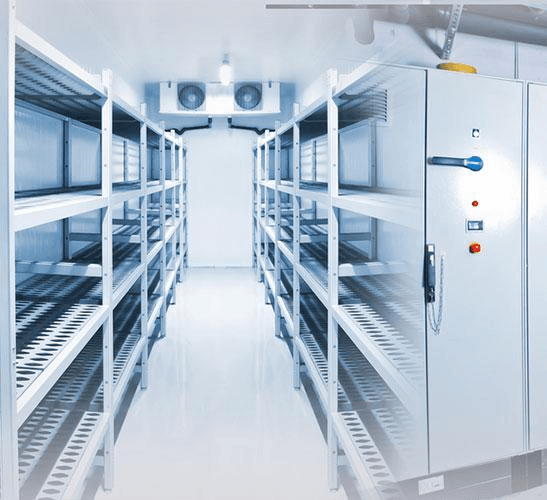
Cold chain management is one of the most critical and most frequently underestimated aspects of high volume catering kitchen management. When you are handling hundreds of kilograms of proteins, dairy products, and fresh produce for a large event, the integrity of your cold chain is a fundamental food safety requirement — and in the UAE’s climate, where ambient temperatures routinely exceed 40°C, it is also an enormous operational challenge.
Walk-In Refrigeration and High-Capacity Cold Storage
Large-scale catering operations require substantial cold storage capacity both for pre-event ingredient holding and for storing prepared components before service. Modern reach-in refrigerators and undercounter chillers serve different functions in the catering kitchen layout — walk-ins and reach-ins for bulk ingredient storage and prepared component holding; undercounters for immediate-access cold storage at preparation stations.
❄️ Reliable cold storage for large-scale ingredient management:Shop Reach-In Refrigerators for Catering Operations
🧊 Keep ingredients cold right at the preparation station:Undercounter Chillers for Station-Level Cold Access
Blast Chilling: The Key to Safe Batch Cooking
When large batches of food are cooked in advance for 500+ guest events — as recommended by the cook and hold approach — blast chilling technology is essential for food safety. Blast chillers rapidly reduce the temperature of cooked food through the danger zone (60°C to 5°C) far faster than conventional refrigeration, preventing bacterial growth and ensuring food safety compliance. In the UAE’s strict food safety regulatory environment, blast chilling is increasingly a compliance requirement, not merely a best practice.
❄️ Rapid chilling for safe large-batch cooking:Explore Professional Blast Chillers
Ice Equipment: Essential for Large Event Beverage Service
Large events in the UAE typically involve extensive beverage service, which requires substantial quantities of ice. Professional ice makers and ice dispensers are essential components of high volume catering kitchen management infrastructure, ensuring a reliable supply of ice for both beverage service and food display cooling throughout the event.
🧊 Reliable ice production for large-scale beverage service:Shop Ice Makers for Large Events
🥤 Keep beverages cold at every station:Ice Dispensers for Self-Service Beverage Stations
Staffing and Team Coordination in High Volume Catering Kitchen Management
The human element of high volume catering kitchen management is as critical as the equipment. A 500+ guest event with perfect equipment but poor team coordination will fail just as surely as one with excellent coordination but inadequate equipment. Building and managing a high-performance kitchen team for large-scale catering is a specialized skill that the best UAE catering professionals develop over years of experience.
read more : How to Start a Catering Business in the UAE: Full License to First Event Guide
Brigade Structure for Large-Scale Events
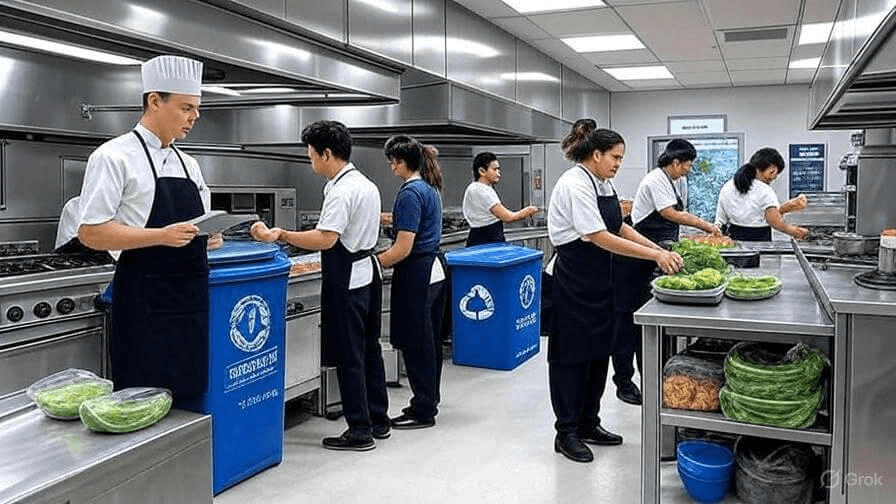
Traditional kitchen brigade structure must be adapted for high-volume catering events. For a 500-person seated dinner, a typical brigade might include an executive chef overseeing overall production, a sous chef on each major station (hot kitchen, cold kitchen, pastry), a dedicated logistics coordinator managing food flow between kitchen and service team, and additional hands at each station scaled to the production requirements.
Clear communication channels are essential. Every team member must know exactly what they are responsible for, what they will hand off and to whom, and what to do if something goes wrong. Pre-event briefings, clear signage in the kitchen, and a unified communication system — whether radio headsets or a shared messaging platform — are non-negotiable elements of effective high volume catering kitchen management.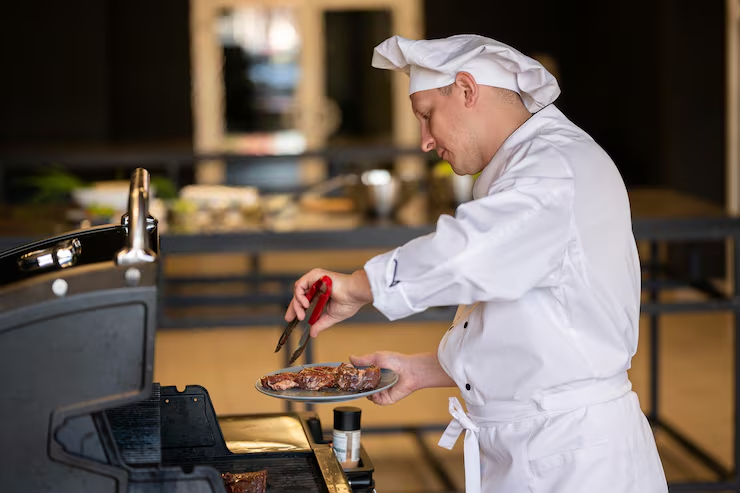
Mise en Place at Scale: Planning Your Prep
Mise en place — everything in its place — is the foundational principle of professional cooking, and it becomes exponentially more important at high volume. For a 500+ guest event, the mise en place process must be planned as meticulously as the event itself: which items can be prepped the day before? Which require fresh same-day preparation? What quantities are needed? How will prepped items be stored and labeled?
The right food preparation equipment — from commercial-grade food processors and slicers to professional mixing equipment — determines how efficiently your team can complete their mise en place in the available prep time.
🔪 Equip your prep team for maximum efficiency:Professional Food Preparation Equipment for Catering
✂️ Consistent slicing at speed for large-volume prep: Professional Food Slicers for Large-Scale Prep
Food Safety and Compliance in High Volume Catering Kitchen Management
Food safety in large-scale catering is not optional — it is a legal requirement, a professional obligation, and a fundamental aspect of protecting your guests and your reputation. In the UAE, catering operations are subject to oversight by food safety authorities in each emirate, with increasingly stringent requirements for large-scale events. High volume catering kitchen management must integrate food safety protocols into every step of the operation.
Temperature Control Throughout the Process
The most critical food safety principle in catering is temperature control. Hot food must be held above 60°C; cold food must be kept below 5°C; and food must transit through the temperature danger zone (5°C to 60°C) as rapidly as possible. For a 500+ guest event, maintaining these temperature controls across hundreds of kilograms of food, multiple holding stations, and a complex service timeline requires both the right equipment and disciplined operational protocols.
HACCP Implementation for Large Events
Hazard Analysis and Critical Control Points (HACCP) is the internationally recognized framework for food safety management. For large-scale catering events, HACCP implementation should include documented critical control points for receiving, cold storage, cooking, cooling, reheating, and service; temperature logging at each CCP; clear corrective action procedures; and documented verification and record-keeping. Many UAE catering operators now require their teams to maintain HACCP documentation for all events above a certain guest count threshold.
Allergen Management at Scale
Managing food allergens across a 500+ guest event is a significant challenge. Guest dietary requirement surveys should be conducted well in advance, clearly flagging all allergen-related needs. Allergen-controlled preparation areas, dedicated equipment, and clear communication between kitchen and service teams are essential. In the UAE, where guest lists frequently include international visitors from many different cultural and dietary backgrounds, rigorous allergen management is a hallmark of professional high volume catering kitchen management.
Beverage Service Management in High Volume Catering Kitchen Management
Large events in the UAE typically involve sophisticated beverage service alongside the food program — from freshly brewed coffee and specialty tea service to freshly pressed juices and specialty cold beverages. Integrating beverage service into your high volume catering kitchen management plan requires dedicated equipment, dedicated staff, and careful coordination with the overall service timeline.
☕ Professional coffee service for large-scale events:Explore Coffee Machines for Large Event Catering
🥤 Fresh juice service at scale:Browse Blenders and Juicers for Beverage Stations
🧃 Large-volume cold beverage dispensing for catering events:Cold and Frozen Beverage Dispensers for Events
Post-Event Evaluation: Improving Your High Volume Catering Kitchen Management
The best high volume catering kitchen management teams treat every event as a learning opportunity. A structured post-event evaluation process — conducted within 24 hours of the event while details are fresh — is one of the most powerful tools for continuous improvement. What went exactly as planned? What had to be improvised on the day? Where were the bottlenecks? What would you do differently? These questions, asked honestly and systematically, are how great catering teams get better with every event.
Key Performance Indicators for Large-Scale Events
Quantitative KPIs for evaluating high volume catering kitchen management performance should include: food cost percentage versus budget; labor hours versus plan; food waste percentage; temperature compliance records; service timing adherence (were courses delivered on schedule?); and guest satisfaction scores. These metrics provide an objective foundation for post-event analysis and continuous improvement planning.
Equipment Performance Review
Post-event is also the right time to evaluate equipment performance. Did your oven bank have sufficient capacity for the production volume? Did your blast chiller keep pace with your batch cooking output? Were there any equipment failures or near-misses during the event? This review informs both preventive maintenance scheduling and longer-term equipment investment planning, ensuring that your kitchen’s equipment arsenal continues to scale with your high volume catering kitchen management ambitions.
🏪 Build your catering kitchen with the right equipment — browse Al Razana:Explore Our Full Restaurant Kitchen Equipment Range
Dishwashing Operations in High Volume Catering Kitchen Management
With 500+ guests generating large quantities of used serviceware simultaneously, dishwashing can become a critical bottleneck in high volume catering kitchen management if not planned carefully. Professional-grade warewashing equipment — particularly conveyor dishwashers capable of processing hundreds of racks per hour — is essential for maintaining the flow of clean serviceware throughout service and enabling rapid post-event clean-up.
🫧 Handle high-volume warewashing efficiently:High-Capacity Conveyor Dishwashers for Large Events
✨ Professional warewashing for catering kitchens:Hood Dishwashers for Catering Kitchen Operations
Frequently Asked Questions
What is high volume catering kitchen management?
High volume catering kitchen management is the systematic planning, coordination, and execution of food production and service for large events, typically serving 200 or more guests. It encompasses menu planning, procurement, equipment deployment, team coordination, food safety compliance, and service execution to deliver high-quality food simultaneously to large numbers of guests.
How do you plan a kitchen for 500 guests?
Planning a kitchen for 500 guests requires: detailed production scheduling working backward from service time; precise calculation of equipment capacity requirements; structured team briefings and role assignments; comprehensive mise en place lists and timelines; cook-and-hold strategies for advance production; robust cold chain management; and detailed HACCP documentation. Equipment selection — particularly oven capacity and holding equipment — is critical.
What equipment is essential for high volume catering?
Essential equipment for high volume catering kitchen management includes: high-capacity combi ovens and convection ovens; cook and hold systems; commercial blast chillers; large-capacity refrigeration; professional bain marie and hot holding equipment; commercial fryers and griddles; food preparation equipment for rapid mise en place; and high-throughput conveyor dishwashers for warewashing.
How many chefs do you need for 500 guests?
For a 500-guest event, a typical kitchen brigade includes 20–35 chefs and kitchen hands, depending on menu complexity, event format, and available equipment. This typically includes an executive chef, 2–3 sous chefs (one per major station), station chefs for each cooking section, prep staff, and a logistics team managing food flow to the service area.
What are the food safety requirements for large catering events in the UAE?
UAE food safety requirements for large catering events include: HACCP documentation and implementation; temperature logs at all critical control points; certified food handler training for all kitchen staff; proper cold chain management; allergen management documentation; and compliance with Dubai Municipality or Abu Dhabi Food Safety Authority guidelines. Requirements vary by emirate and event scale.
How do you maintain food quality across 500+ servings?
Maintaining food quality across 500+ servings requires: standardized recipes with precise specifications; cook and hold technology for consistent temperature holding; blast chilling for advance-produced items; professional bain marie and hot holding equipment; rigorous quality checking at plating; and regular calibration of cooking equipment to ensure consistency.
What is the biggest challenge in high volume catering kitchen management?
The most consistently cited challenge in high volume catering kitchen management is timing synchronization — ensuring that all components of a course are ready simultaneously, at the correct temperature and quality, at exactly the right moment for service. This requires meticulous planning, reliable equipment, clear team communication, and experienced leadership that can adapt in real time when anything deviates from plan.
How should you handle dietary restrictions at a large catering event?
Managing dietary restrictions at large events requires: pre-event dietary surveys sent to all guests; dedicated allergen-controlled preparation areas and equipment; clear kitchen communication protocols between allergen-aware prep and service teams; clearly labeled food items at buffet or passed-service stations; and designated staff responsible for allergen management during service.
What is cook and hold in catering?
Cook and hold in catering refers to the process of cooking large batches of food to the appropriate internal temperature, then holding them in a thermally controlled environment (typically 60–65°C) until service time. Cook and hold technology allows catering teams to spread their production workload over a longer window, reducing last-minute kitchen pressure and enabling more consistent results for large events.
How do beverage stations work for 500+ guest events?
Beverage service for 500+ guest events requires multiple independently stocked and staffed stations positioned for easy guest access. Each station needs dedicated equipment — coffee machines, blenders, juice dispensers, ice equipment, and cold beverage dispensers — sufficient to serve the anticipated throughput. Station capacities must be calculated based on event flow, peak demand periods, and service format.
Conclusion: Mastering High Volume Catering Kitchen Management
Executing a flawless event for 500, 1,000, or even 5,000 guests is one of the most demanding achievements in the culinary world. It requires a perfect fusion of meticulous planning, the right equipment, disciplined team coordination, rigorous food safety protocols, and the leadership presence to hold everything together when — as inevitably happens — something does not go exactly to plan.
The principles of high volume catering kitchen management are clear: plan earlier and more thoroughly than you think necessary; invest in equipment that matches your scale aspirations; build and train a team that owns the mission; integrate food safety into every step; and never stop learning from every event you execute. Whether you are building a catering operation from scratch or scaling an existing business to handle larger and more prestigious events, the framework outlined in this guide gives you the foundation to succeed.
The UAE’s extraordinary events industry shows no signs of slowing down. The demand for impeccably executed large-scale events — and the high volume catering kitchen management expertise to deliver them — will only grow in the years ahead. Position your operation to meet that demand, and success will follow.
If this guide helped you think through your large-scale catering operation, please share it with your team, leave a comment with your own insights and experiences, and explore our related resources on commercial kitchen equipment, food safety, and F&B operations strategy. We look forward to supporting your journey to catering excellence.