
Catering Pricing Formula UAE: How to Price Catering Services for Sustainable Profitability
8 June 2026
The catering industry in the UAE offers tremendous opportunities for growth. From corporate events and private gatherings to weddings, exhibitions, hospitality functions, and large-scale institutional catering, demand continues to grow across multiple sectors.
However, many catering businesses struggle with one critical challenge:
Pricing services correctly while maintaining profitability.
Some companies price too aggressively in an attempt to win contracts.
Others add excessive margins and lose opportunities to competitors.
The most successful catering operators understand that pricing is not simply about adding a markup to food costs.
A profitable catering pricing formula UAE businesses can rely on requires a comprehensive understanding of operational expenses, labour requirements, equipment utilization, logistics, kitchen efficiency, project complexity, and long-term business objectives.
This is where operational planning becomes just as important as food quality.
Businesses that invest in efficient commercial kitchens, optimized workflows, reliable catering equipment, and scalable production systems are often better positioned to maintain healthy profitability while remaining competitive.
As a provider of complete commercial kitchen solutions, Al Razana Kitchen Equipment works with catering businesses across the UAE to help create operational environments designed for efficiency, scalability, and long-term growth.
Why Catering Pricing Is Different From Restaurant Pricing
Many hospitality professionals assume catering pricing works similarly to restaurant pricing.
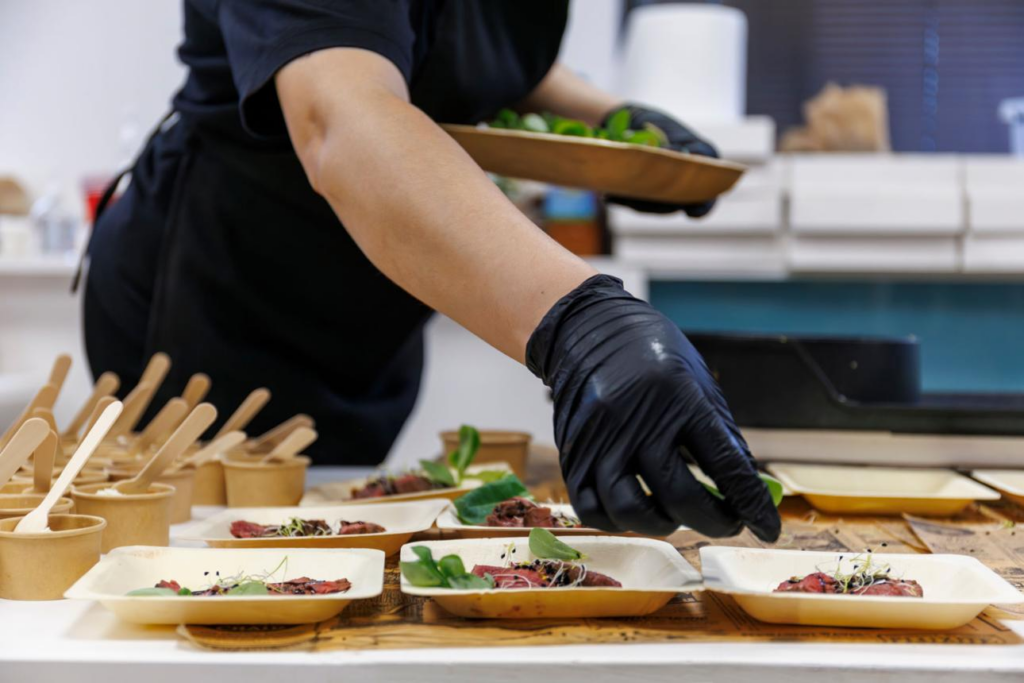
In reality, catering operations involve a significantly different cost structure.
Restaurants benefit from fixed operating environments.
Catering businesses operate in constantly changing conditions.
Every event introduces new variables.
These variables may include:
- Guest count
- Event location
- Staffing requirements
- Transportation needs
- Equipment requirements
- Service complexity
- Setup and breakdown logistics
As a result, catering pricing requires a more flexible and strategic approach.
Understanding the Foundation of a Catering Pricing Formula
Before establishing prices, catering operators must understand every cost component involved in delivering an event successfully.
Many businesses underestimate their true operational expenses.
This often results in underpricing.
A sustainable pricing model begins with identifying all business costs.
Core Cost Categories
Most catering operations must account for:
- Food ingredients
- Beverage supplies
- Labour costs
- Transportation expenses
- Equipment usage
- Packaging materials
- Event setup requirements
- Administrative expenses
- Marketing costs
- Facility overheads
Each category contributes to the final pricing structure.
Ignoring even one category can significantly impact profitability.
Cost Per Head Calculation: The Starting Point of Catering Pricing
One of the most commonly used approaches in the industry is cost-per-head pricing.

This method helps catering businesses estimate service costs based on the expected number of guests.
However, successful operators understand that cost per head is only the starting point.
What Influences Cost Per Head?
Several factors affect guest-based pricing:
- Menu complexity
- Service style
- Portion requirements
- Event duration
- Staffing levels
- Equipment needs
- Logistics requirements
Because every event differs, cost-per-head calculations should remain flexible rather than fixed.
Why Standardized Systems Improve Accuracy
Businesses that develop structured costing systems often achieve greater consistency in pricing decisions.
These systems help operators evaluate projects more accurately while protecting profitability.
Why Labour Loading Is Critical in Catering Pricing
Labour is often one of the largest expenses in catering operations.
Unlike traditional restaurants, staffing requirements frequently change from event to event.
Labour costs may include:
- Kitchen staff
- Chefs
- Service personnel
- Supervisors
- Logistics teams
- Event coordinators
Accurately allocating labour expenses is essential for sustainable pricing.
Common Labour Pricing Mistakes
Many catering businesses make the mistake of focusing only on direct event labour.
However, successful pricing models consider:
- Preparation time
- Transportation time
- Setup time
- Service time
- Breakdown time
- Administrative support
Every labour hour contributes to operational costs.
Why Kitchen Efficiency Impacts Pricing Competitiveness
Two catering businesses may offer identical menus while generating completely different profitability outcomes.
The difference often comes down to operational efficiency.
An efficient production environment allows businesses to:
- Prepare food faster
- Reduce waste
- Improve consistency
- Increase production capacity
- Control labour requirements
These advantages directly support competitive pricing.
How Commercial Kitchen Design Supports Catering Profitability
Many catering companies focus exclusively on menu development and client acquisition.
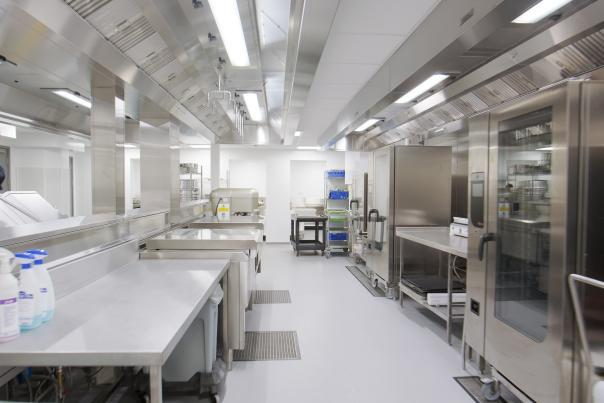
However, production efficiency often determines long-term success.
Commercial kitchen design plays a major role in this process.
Benefits of Strategic Kitchen Design
An optimized kitchen supports:
- Faster production
- Better workflow
- Improved storage management
- Reduced labour pressure
- Increased production capacity
For catering businesses handling multiple events simultaneously, workflow efficiency becomes especially important.
Why Al Razana Starts With Operational Planning
At Al Razana Kitchen Equipment, kitchen design begins with understanding business objectives.
Rather than simply supplying equipment, the focus is placed on:
- Production volume
- Menu requirements
- Staffing workflows
- Growth expectations
- Equipment integration
This approach helps catering businesses create kitchens designed for operational success.
Equipment Amortisation: The Hidden Factor Many Catering Businesses Ignore
Commercial kitchen equipment represents a significant investment.
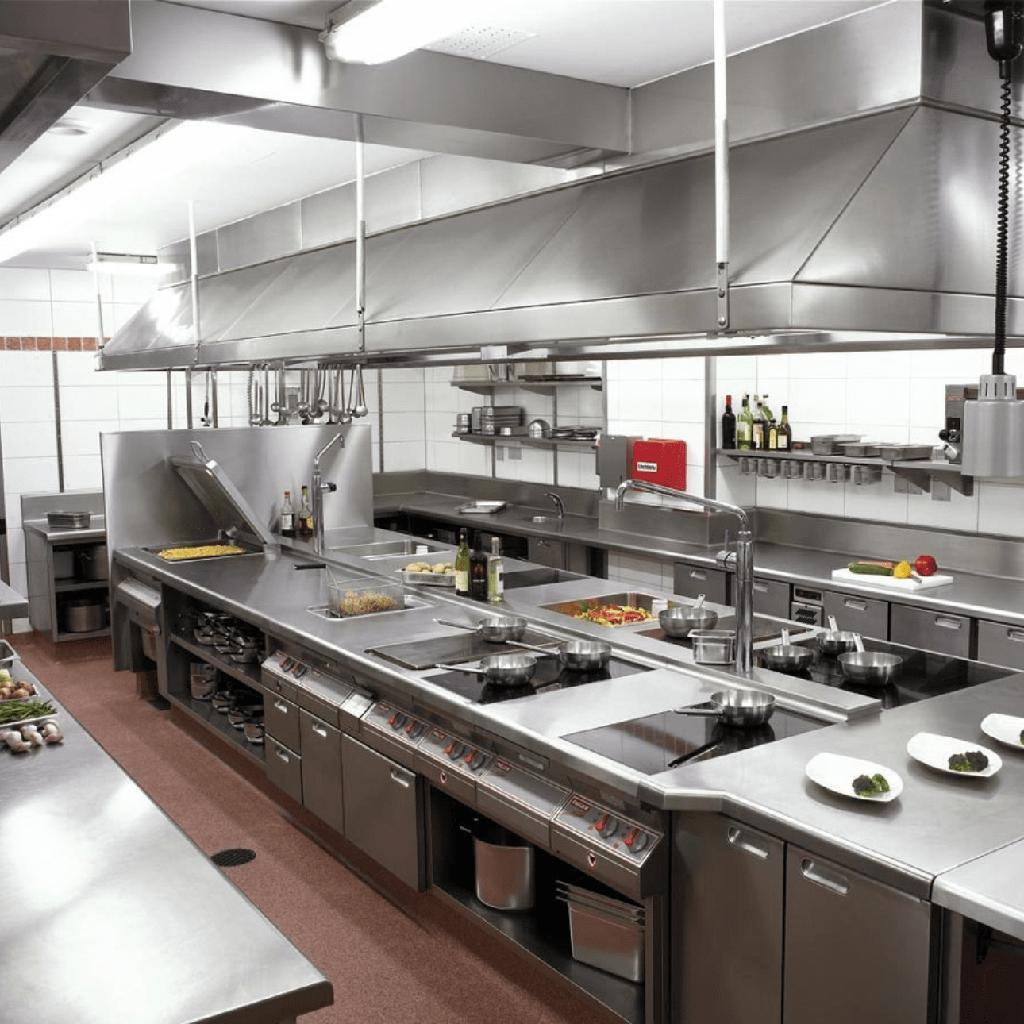
However, many operators fail to account for equipment usage when developing pricing strategies.
Equipment contributes value throughout every event.
This includes:
- Cooking equipment
- Refrigeration systems
- Food preparation stations
- Transportation equipment
- Storage solutions
- Serving equipment
Ignoring equipment costs often leads to inaccurate pricing decisions.
Equipment Supports Long-Term Production Capacity
Professional catering operations rely heavily on equipment performance.
Reliable systems help businesses:
- Increase output
- Improve consistency
- Reduce downtime
- Support larger events
- Maintain food quality
These benefits contribute directly to long-term profitability.
Why Commercial Kitchen Equipment Should Be Viewed as a Revenue Generator
Many hospitality businesses treat equipment as an expense.
High-performing operators view equipment as an operational asset.
Quality equipment supports:
- Production efficiency
- Event scalability
- Operational consistency
- Labour productivity
- Customer satisfaction
When equipment contributes to operational improvements, it becomes a driver of profitability rather than merely a business cost.
Competitor Rate Benchmarking: Understanding the Market Without Competing on Price
Many catering companies compare their prices directly against competitors.
While benchmarking is useful, it should not become the sole pricing strategy.
Competing solely on price often creates long-term challenges.
Why Lowest Price Is Not Always Best
Businesses that compete exclusively on price frequently experience:
- Reduced profitability
- Lower service quality
- Increased operational pressure
- Limited growth potential
Instead, successful operators focus on value.
Factors That Influence Market Positioning
Pricing should reflect:
- Service quality
- Operational capability
- Equipment standards
- Production capacity
- Event execution quality
- Customer experience
Businesses that offer greater value can often justify stronger pricing positions.
Why Complete Commercial Kitchen Solutions Create Competitive Advantages
Many catering businesses purchase equipment from multiple vendors.
While this may appear cost-effective initially, it often creates operational challenges.
A more integrated approach provides significant advantages.
Complete Solutions Include
- Kitchen Design
- Planning
- Equipment Supply
- Installation
- Fabrication
- Maintenance
- Consultancy
This coordinated approach often improves long-term performance.
How Al Razana Kitchen Equipment Supports Catering Businesses Across the UAE
Successful catering operations require much more than cooking equipment.
They require infrastructure designed for growth.
Al Razana Kitchen Equipment supports catering companies through complete commercial kitchen solutions tailored to hospitality and foodservice environments.
Commercial Kitchen Design
Creating efficient production environments.
Kitchen Planning & Consultancy
Aligning operational requirements with business objectives.
Equipment Procurement
Providing professional foodservice equipment UAE businesses depend on.
Installation Services
Ensuring operational readiness from day one.
Stainless Steel Fabrication
Custom-built solutions designed around workflow requirements.
Maintenance Support
Helping businesses maximize equipment performance.
Turnkey Kitchen Projects
Delivering complete project solutions from concept to completion.
Minimum Order Thresholds: Why Every Catering Business Needs Them
One of the most overlooked aspects of a catering pricing formula UAE businesses should implement is the establishment of minimum order thresholds.
Many catering operators accept small orders without evaluating whether the project can realistically generate profit.
The problem is that certain costs remain almost identical regardless of event size.
These costs often include:
- Transportation
- Coordination
- Setup
- Equipment preparation
- Administrative work
- Kitchen preparation time
When these costs are spread across too few guests, profitability can quickly disappear.
Why Minimum Order Requirements Matter
Minimum order thresholds help businesses:
- Protect profitability
- Improve resource allocation
- Increase operational efficiency
- Reduce scheduling conflicts
- Prioritize high-value opportunities
Rather than viewing minimum orders as a sales barrier, successful catering companies treat them as a profitability protection mechanism.
Building a Sustainable Catering Pricing Strategy
Pricing should never be based on guesswork.
The most successful catering businesses develop structured pricing systems that can be applied consistently across different event types.
A Practical Pricing Framework
A strong catering pricing formula should consider:
Food & Beverage Costs
Raw materials and ingredient requirements.
Labour Allocation
Kitchen, service, logistics, and supervision.
Equipment Utilization
Production and event equipment usage.
Transportation Requirements
Delivery and event logistics.
Event Complexity
Level of service and operational demands.
Overhead Allocation
Facility and business operating costs.
Desired Profitability
Business growth and sustainability objectives.
By evaluating all these factors together, businesses create pricing structures that support long-term success.
Why Event Complexity Should Influence Pricing
Not all catering projects are equal.
Two events with identical guest counts can require dramatically different resources.
Factors That Increase Event Complexity
These may include:
- Multiple service stations
- Live cooking stations
- Remote locations
- Extended event durations
- Specialized menus
- Multiple service periods
- Large setup requirements
Ignoring complexity often leads to underpricing.
Successful operators evaluate the total operational effort required to deliver each event.
How Catering Businesses Can Improve Margins Without Raising Prices
Many business owners assume profitability improvements require higher prices.
In reality, operational efficiency often delivers greater impact.
Areas That Drive Efficiency
Kitchen Workflow Optimization
Reducing unnecessary movement and bottlenecks.
Equipment Performance
Increasing production speed and consistency.
Inventory Management
Reducing waste and spoilage.
Staff Productivity
Improving labour utilization.
Production Planning
Streamlining event preparation processes.
These improvements allow businesses to strengthen profitability while remaining competitive.
Why Commercial Kitchen Equipment Directly Affects Catering Costs
The relationship between equipment and pricing is often underestimated.
However, equipment performance influences nearly every stage of catering production.
Equipment Impacts
- Production speed
- Food consistency
- Labour requirements
- Product quality
- Waste reduction
- Event readiness
Businesses operating with outdated or poorly selected equipment often experience higher operating costs.
Investing in the Right Equipment Infrastructure
Professional catering operations typically require:
- Commercial cooking equipment
- Refrigeration systems
- Food preparation equipment
- Holding and storage solutions
- Transport-friendly service equipment
- Stainless steel workstations
These systems create the operational foundation needed for sustainable growth.
The Role of Commercial Kitchen Design in Catering Scalability
As catering businesses grow, operational complexity increases.
What works for a small operation may not support larger event volumes.
This is where commercial kitchen design becomes increasingly important.
Signs a Catering Kitchen Needs Optimization
Common indicators include:
- Production bottlenecks
- Staff congestion
- Limited storage capacity
- Slow event preparation
- Workflow inefficiencies
These challenges often signal the need for a redesigned operational environment.
Strategic Kitchen Planning Creates Growth Opportunities
An optimized commercial kitchen allows businesses to:
- Handle larger events
- Improve production consistency
- Increase daily output
- Support multiple simultaneous projects
- Reduce operational pressure
This creates stronger foundations for long-term business growth.
Why Turnkey Commercial Kitchen Projects Benefit Catering Companies
Many catering operators begin by purchasing equipment from multiple suppliers.
While this approach may seem practical initially, it often creates challenges later.
Common Problems With Fragmented Purchasing
Businesses frequently encounter:
- Equipment compatibility issues
- Installation delays
- Workflow conflicts
- Space utilization problems
- Maintenance complications
Turnkey project delivery helps avoid these challenges.
Benefits of a Complete Solution
An integrated project approach provides:
- Unified planning
- Coordinated execution
- Better workflow design
- Improved accountability
- Faster project completion
This approach is especially valuable for businesses planning expansion.
Why Catering Businesses Need More Than Equipment Suppliers
A growing catering operation requires strategic support.
The most successful companies look beyond equipment purchases and seek partners capable of supporting operational growth.
What Catering Businesses Actually Need
They often require:
- Kitchen design expertise
- Workflow planning
- Equipment selection guidance
- Installation support
- Fabrication services
- Maintenance planning
- Business scalability solutions
This broader perspective helps create stronger long-term outcomes.
Why Al Razana Kitchen Equipment Is a Strategic Partner for Catering Businesses
Al Razana Kitchen Equipment supports hospitality and catering businesses throughout the UAE by providing complete commercial kitchen solutions rather than simply supplying products.
This distinction is important.
A catering company’s success depends on how effectively all operational components work together.
Commercial Kitchen Design
Creating kitchens optimized for production efficiency.
Kitchen Planning & Consultancy
Aligning facility design with operational objectives.
Commercial Equipment Supply
Providing reliable foodservice equipment designed for demanding environments.
Kitchen Equipment Installation
Ensuring equipment is implemented correctly from the beginning.
Stainless Steel Fabrication
Developing customized solutions that maximize workflow efficiency.
Maintenance & Technical Support
Helping businesses maintain operational continuity.
Turnkey Commercial Kitchen Projects
Delivering integrated project solutions from concept to completion.
This comprehensive approach helps catering businesses build stronger, more scalable operations.
Common Catering Pricing Mistakes That Reduce Profitability
Many catering companies struggle not because of insufficient demand but because of pricing mistakes.
Underestimating Labour Costs
Failing to account for preparation, transport, setup, service, and breakdown time.
Ignoring Equipment Utilization
Not allocating equipment-related operational costs appropriately.
Competing Solely on Price
Reducing prices without improving operational efficiency.
Failing to Establish Minimum Order Requirements
Accepting projects that do not support profitability.
Neglecting Operational Efficiency
Overlooking workflow improvements that could reduce costs.
Using Generic Pricing Models
Applying the same pricing structure to every event regardless of complexity.
Avoiding these mistakes helps create healthier business performance.
How Catering Businesses Can Prepare for Sustainable Growth
Growth should be intentional.
Businesses that scale successfully typically focus on building systems rather than simply increasing sales.
Growth Priorities Include
- Standardized pricing processes
- Efficient production systems
- Professional kitchen infrastructure
- Reliable equipment platforms
- Staff development
- Workflow optimization
Strong operational foundations make growth significantly easier to manage.
Conclusion
Developing an effective catering pricing formula UAE businesses can rely on requires much more than estimating food costs.
Successful pricing considers every operational component involved in event execution, including labour allocation, equipment utilization, logistics, production efficiency, and business overheads.
Companies that build structured pricing systems are often better positioned to maintain profitability while remaining competitive.
At the same time, pricing alone is not enough.
Long-term success depends on operational excellence.
Commercial kitchen design, equipment performance, workflow planning, maintenance strategies, and scalable infrastructure all contribute to healthier business outcomes.
As a trusted provider of complete commercial kitchen solutions, Al Razana Kitchen Equipment supports catering companies, foodservice operators, hospitality groups, and event businesses throughout the UAE with commercial kitchen design, planning, procurement, installation, stainless steel fabrication, maintenance, consultancy, and turnkey project solutions designed to support sustainable growth.
Whether launching a new catering venture or expanding an established operation, the right operational foundation can have a lasting impact on profitability and long-term success.
Frequently Asked Questions
What is the best catering pricing formula in the UAE?
The most effective pricing formula accounts for food costs, labour allocation, equipment utilization, transportation, overhead expenses, and desired profitability.
Why is cost-per-head pricing important?
Cost-per-head pricing provides a structured starting point for estimating event expenses and establishing pricing consistency.
How should labour costs be included in catering pricing?
Labour calculations should include preparation, transportation, setup, service, supervision, and breakdown activities.
Why do catering companies need minimum order thresholds?
Minimum order requirements help ensure that projects generate sufficient revenue to cover operational costs and maintain profitability.
How does commercial kitchen design affect catering profitability?
An efficient kitchen layout improves workflow, increases production capacity, reduces labour pressure, and supports better resource utilization.
Why should equipment costs be considered in catering pricing?
Equipment contributes directly to production efficiency, consistency, and event execution capabilities, making it an important operational asset.
What are turnkey commercial kitchen projects?
Turnkey projects include planning, design, equipment supply, installation, fabrication, maintenance, and project management under one coordinated solution.
How can catering businesses improve profitability without raising prices?
Improving workflow efficiency, reducing waste, optimizing labour utilization, and upgrading operational systems can strengthen profitability.
What services does Al Razana Kitchen Equipment provide?
Al Razana provides commercial kitchen design, consultancy, equipment supply, installation, stainless steel fabrication, maintenance support, and turnkey kitchen project solutions.
Why do growing catering businesses work with Al Razana?
Because Al Razana helps businesses create scalable operational environments through complete commercial kitchen solutions tailored to hospitality and foodservice operations across the UAE.